Plants for a windowless office – is it possible?
Looking for plants and flowers for a windowless office? Check out which species thrive in the shade, how to care for them, and whether artificial lighting can help them grow.
Plants for a windowless office – is it possible? Let’s be clear: no houseplant can grow and develop properly without any access to natural light. This is due to photosynthesis, the process by which plants convert light energy into the nutrients needed for growth. Without at least a minimal amount of light, photosynthesis cannot occur, leading to a weakened plant, stunted growth, and eventually death. However, the situation is much better in rooms that are generally shaded or semi-shaded. There are plant species that can cope with limited light, and with proper artificial lighting and care, they can survive in dim interiors. Which plants should you choose for a shaded office and how do you care for them? Here are a few tips to help you create a plant arrangement in a space with limited sunlight.
1. Selecting species for a shaded office - plants for a windowless office
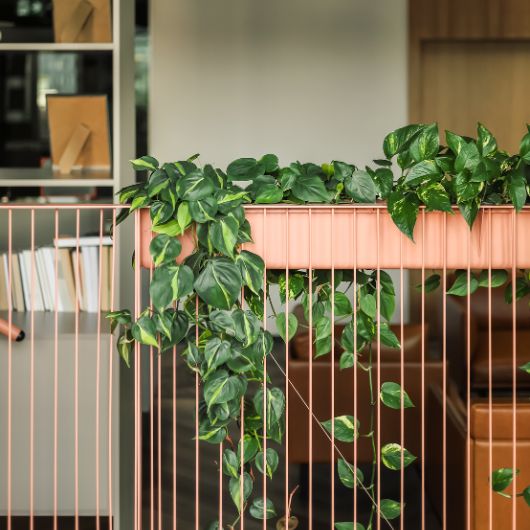
In offices with minimal access to light, species selection becomes even more important. Your options will be somewhat limited, but that doesn't mean you can't find interesting species with unique shapes for your plant arrangement. Rule out colorful potted flowers, succulents, or citrus plants from the start. We know they look beautiful, but their beauty comes with high demands. Without access to natural light, they will quickly weaken, lose their intense colors, and their growth will be stunted. To identify plants that don't mind shaded rooms, check out our article on the 5 best plant species for a shaded office.
2. Grow lights for potted plants in the office
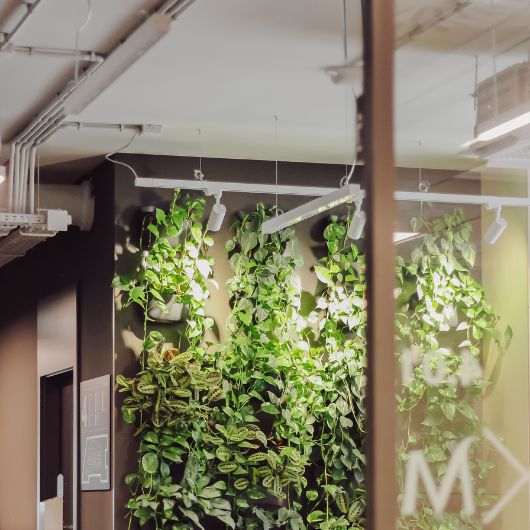
If your office space receives little natural light, it is worth considering supplementing it with specialized lamps. They emit light with a spectrum similar to sunlight, supporting the photosynthesis process. LED lamps with a color temperature of 4000 - 6500 K, i.e., neutral or cool white, work best. Place them 20-40 cm away from the plant pot to avoid burning the leaves, and ensure a regular lighting cycle - from 10 to 12 hours a day. Depending on the conditions in your office, you can use grow lights all year round or only in autumn and winter, when days are shorter and natural light is even more limited. If you are not sure which lamps to choose and how to arrange them in the office, consult with our greenery designers during a no-obligation, 30-minute consultation.
3. Rotating plants - why is it important?
Regularly rotating your plant pots helps them grow evenly on all sides instead of leaning toward the light source. This allows the plant to maintain a symmetrical and aesthetic shape, and most importantly, to develop properly. Furthermore, light in an office changes throughout the year, so there may be periods when a given spot gets more or less of it. It is worth moving the plant to a sunnier spot then. However, remember that if a plant has been in the shade for a long time, suddenly exposing it to full sun can cause leaf burn. Make any environmental changes gradually so the plant has time to adapt. Also, observe how it reacts to its new location.
If you have larger plants in heavy pots, place them on wheeled stands - this will make it easier to rotate the pots and move the plants without the risk of damage.
4. Proper care for plants and flowers in the office
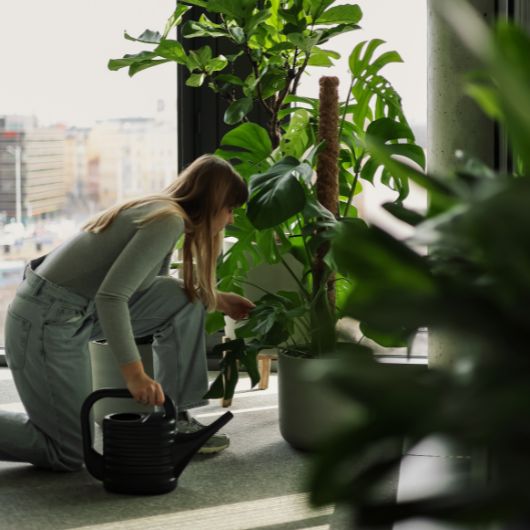
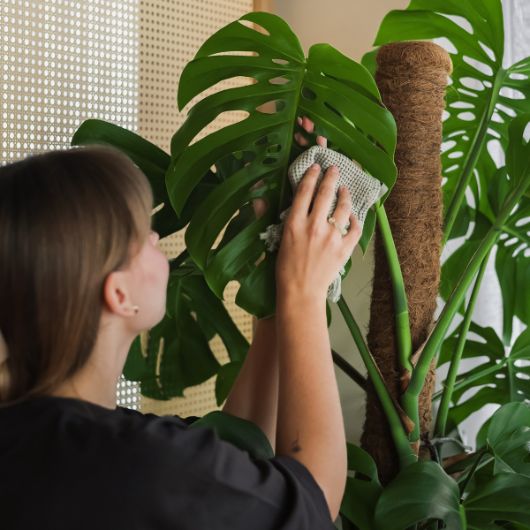
Plants in shaded offices generally grow more slowly, which means their care needs are specific. First and foremost, water them sparingly - the lack of light means the soil dries out more slowly, and excess water can lead to root rot. If you're not sure if it's the right time, simply insert your finger into the soil (to a depth of about 1 cm) and check if the top layer is dry. If it is - it's time to water! Also, regularly wipe dust off the leaves, as a layer of dirt reduces the efficiency of photosynthesis. During the growing season (from March to October), which is the period of strongest growth, provide the plants with appropriate fertilizers. In shaded conditions, it is worth choosing nutrients with a lower nitrogen content to avoid excessive stretching of stems in search of light.
And what about fertilizing and caring for plants in autumn and winter? For more tips, check out this article on autumn care.
Plants and flowers for a windowless office? - don't force it
Plants and flowers for a windowless office - is it possible if your office doesn't have a single window? It's better to opt for other decorative elements, such as aesthetic prints by local artists, lamps with interesting shapes, or other items that will add character to the space. It is not worth forcing plants into rooms completely devoid of natural light - this can end in frustration from constant attempts to save wilting specimens. After all, greenery in the office should be a joy, not a burdensome chore.
If your office still gets some light, choose shade-tolerant species and ensure proper care - supplemental lighting, rotation, moderate watering, fertilizing during the growing season, and regular leaf cleaning. We would be happy to help you choose the right species and a care routine during a consultation and we will take care of your office jungle as part of our office plant maintenance service.
Frequently asked questions - office plants and flowers
What flowers are suitable for an office without windows?
No potted plants can survive without access to light, as photosynthesis is essential for their growth. If your office has no windows, it is better to choose other decorations to add character to the space rather than fighting the inevitable decline of the plants.
Which plants grow in the shade?
Some species thrive in low-light conditions. For a semi-shaded office, consider plants like the ZZ plant, snake plant, peace lily, or aglaonema. Regular supplemental lighting and proper care will help them thrive.
Which flower does not need light?
Every plant needs light for photosynthesis and healthy growth. If there is no access to daylight in the office, no flower will survive without supplemental lighting. In such conditions, it is worth considering other forms of decoration, such as artwork or decorative lamps.