How to choose planters for offices and commercial interiors? A short guide for architects and designers
Learn how to choose planters for offices and commercial spaces. Practical tips, materials, inspiration, and trends in plant arrangements.
Plants can enliven any space, but to maintain their charm and health for years, they need the right setting. Planters, which are often treated as secondary in interior design, are an important element of a plant arrangement. Choosing them correctly affects whether the plant will be able to thrive, whether the arrangement will be durable and easy to maintain, and whether the whole will be consistent with the aesthetics and goals of the space. In this guide, we explain step-by-step how to wisely choose planters for offices and commercial interiors. We suggest what to look for, discuss the most popular materials and their properties, and offer advice on how to match planters to different spaces.
What to choose first – the plant or the planter?
This is one of the first dilemmas interior designers and architects face when incorporating plants into a project. Our advice is this: if the interior is still being designed and there is no greenery yet, decide on the plant first, and only then on the planter. The conditions of the space (including light access, layout, and square footage) determine which species have a chance to thrive there.
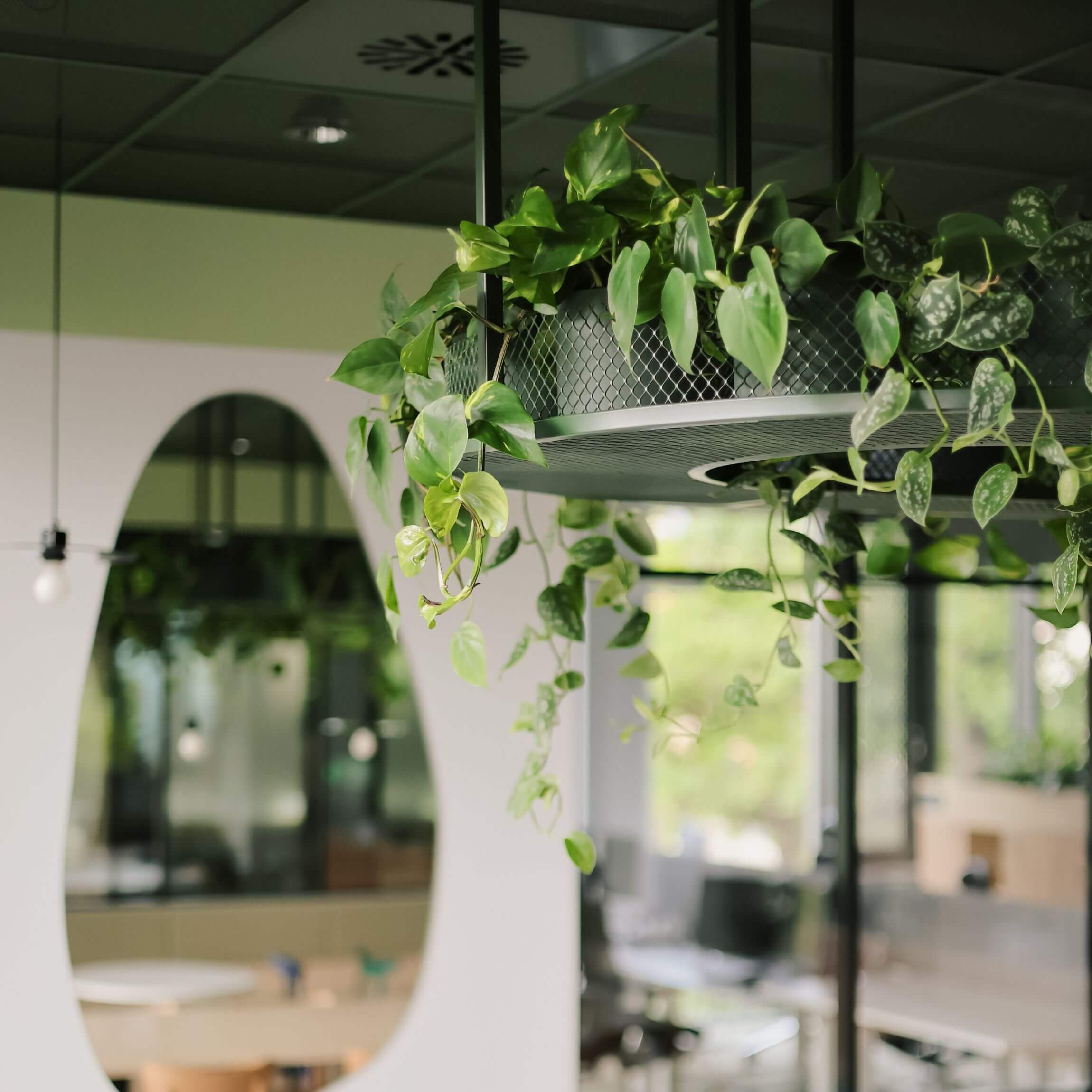
In large, bright spaces like lobbies or reception areas, plants with a spreading habit that can reach impressive sizes work well – for example, monstera or a tree-form ficus. In areas with limited space and less light, it is better to opt for trailing species that enjoy indirect light – for example, epipremnum,philodendron scandens or maranta, plants ideal for green walls or ceiling compositions.
Only when you know which plants you can use can you move on to selecting planters. Their size and shape must support the plant's development. A planter that is too small will restrict growth, while one that is too large will retain water, increasing the risk of overwatering. It is worth considering specific species at the concept stage, and then matching them with appropriate sizes and types of planters so that the whole is not only aesthetic but, above all, functional.
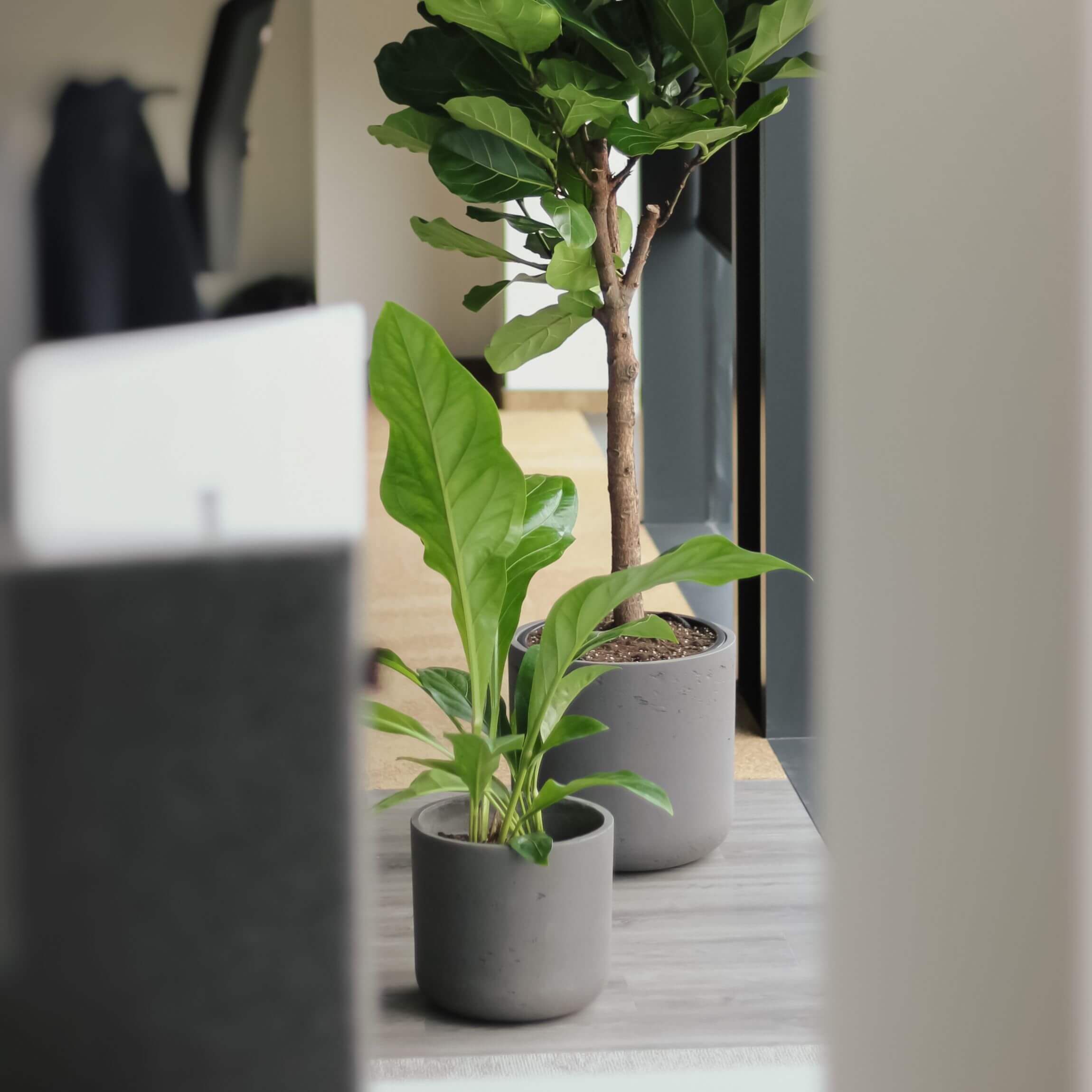
What should you pay attention to when choosing a planter?
Even if you take care to select the right species and consider the specifics of the interior, you cannot always predict how a plant will behave in a given planter. That is why we recommend treating the planter as a decorative cover and not planting the plant directly in it, but rather in a separate liner. Why is this so important?
Not every planter has drainage
There are planters that, while aesthetic, do not have holes at the bottom, which makes it significantly harder for excess water to drain and evaporate. The lack of drainage increases the risk of overwatering and root rot if you decide to plant directly without an additional liner. Furthermore, in the long run, you may have difficulty assessing when a plant needs repotting because access to the root system is significantly restricted. A liner partially solves this problem; it can be lifted relatively easily to check if roots are starting to grow through the drainage holes. This is usually a sign that the plant needs more space.
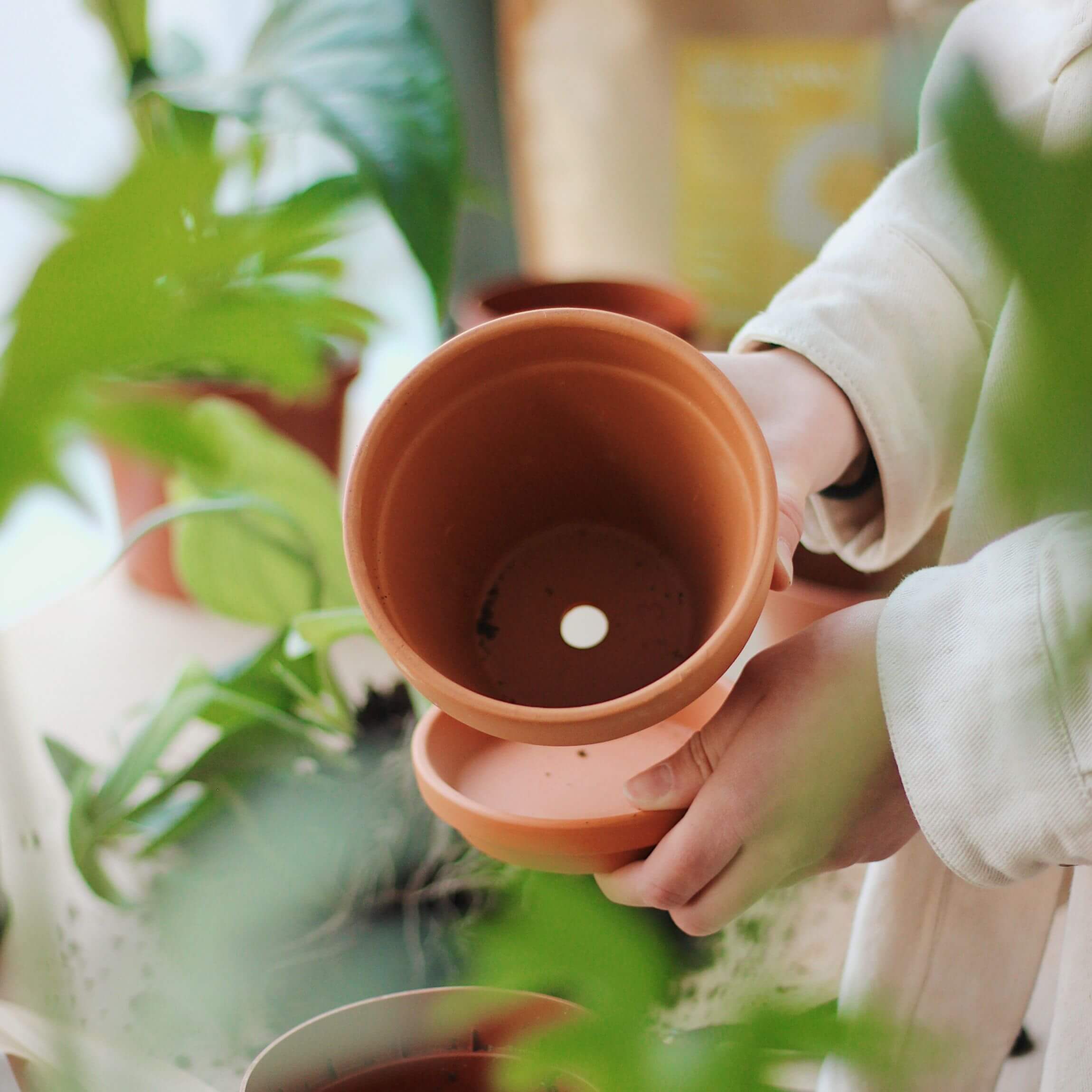
Easier maintenance and soil replacement
A planter with a liner also makes daily care much easier. The plant can be easily removed, watered, and placed back into the cover. This is particularly important in arrangements where plants are placed at height (e.g., green walls or ceiling compositions), where watering might require a ladder. With a liner, the entire operation becomes much simpler and safer. Replacing the soil is also more efficient, which you will notice especially in the case of XXL-sized plants. Instead of moving a pot weighing ten or several dozen kilograms, you only work with the liner.
Easier transport
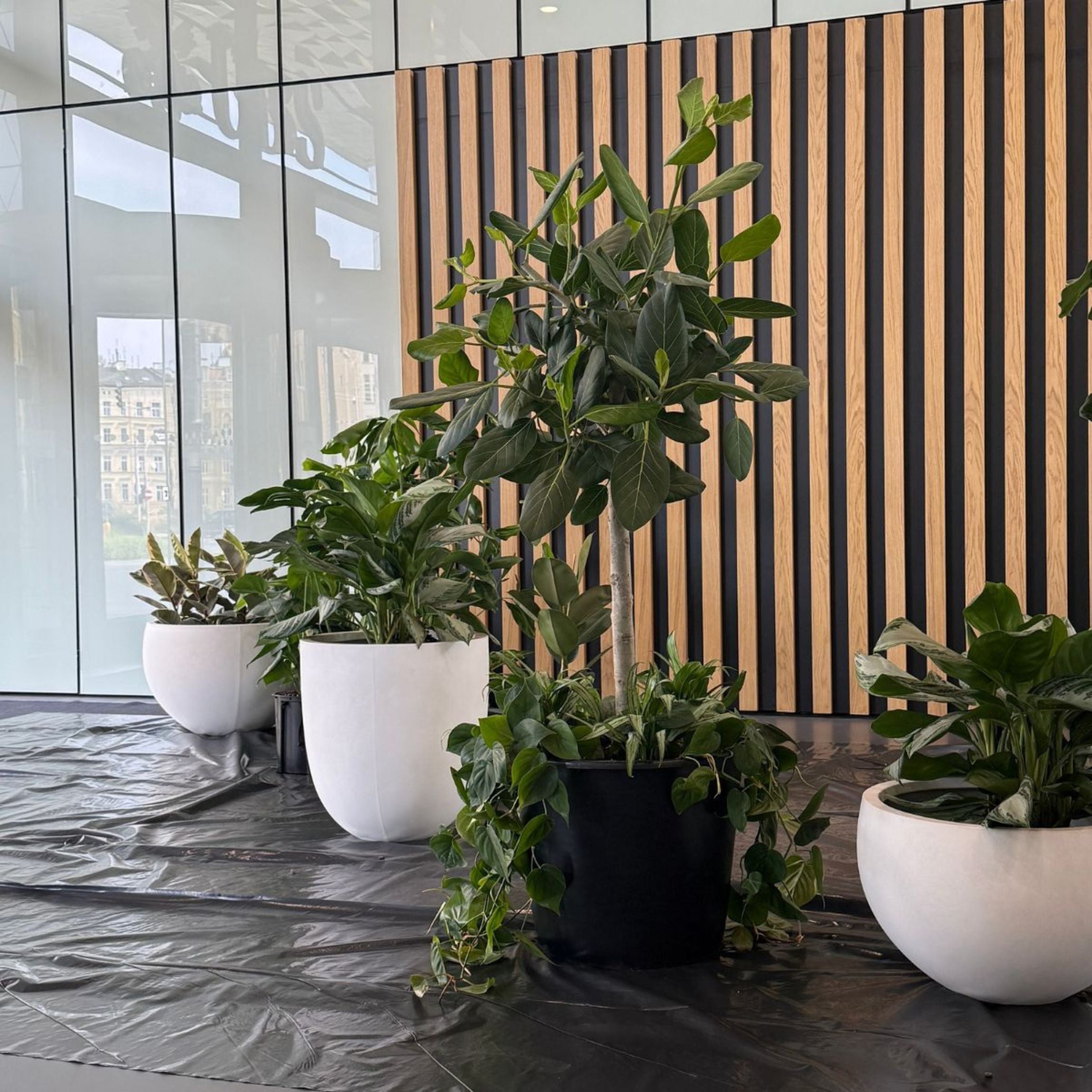
The weight of the pots is another argument in favor of planting in liners. For example, a large pot from one of our projects for the Green Day office lobby in Wrocław weighed 23 kg before adding the specialized substrate and the plant itself. If we had planted directly into it, transport and arrangement would have been a much greater logistical challenge. Thanks to liners, it is easier to plan the planting, maintenance, and potential relocation of plants.
Which pot materials work best for interiors?
The material a pot is made of affects not only the interior aesthetics but also the ease of maintenance and the durability of the entire arrangement. However, every material has its pros and cons—let's take a look at them.
Natural materials—ceramic, stoneware, terracotta, and concrete pots
In our opinion, pots made of concrete and clay-based materials are among the most beautiful options available on the market. They fit perfectly into biophilic interiors, where natural materials are the foundation of the design. However, their aesthetics come with certain challenges.
- Terracotta —a classic among pots. It is porous, which gives plant roots good access to air, but the material also retains moisture for a long time. This can result in mineral salt efflorescence on the surface, which persists for some time after watering and can eventually turn into a light-colored deposit.
- Ceramics and stoneware —are less absorbent than terracotta, but they can easily crack under impact or sudden temperature changes (this applies primarily to pots in outdoor arrangements). It is best to use them indoors as decorative covers.
- Concrete —is very popular in modern office or hotel arrangements due to its raw, minimalist look. It is also more resistant to mechanical damage than terracotta, ceramics, and stoneware. On the other hand, concrete pots are significantly heavier, so if you decide on a large size, consider the logistics of transport and installation. Due to its porous structure, a concrete pot can also be harder to keep clean.
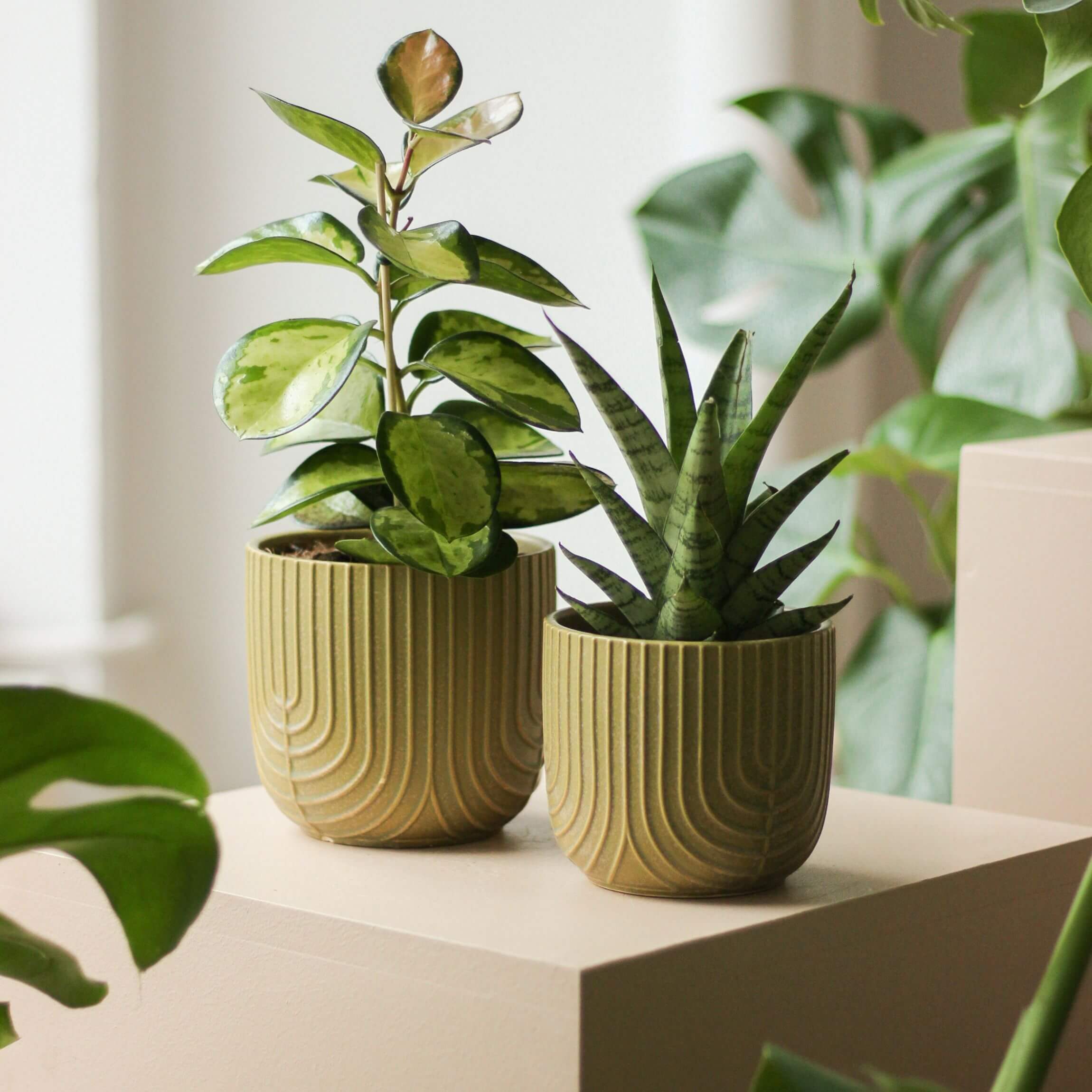
Synthetic materials—plastic, fiberglass, and polyester resin pots
The biggest advantage of pots made of synthetic materials is their lightness and durability, which makes them a good choice for green walls, ceiling installations, or mobile compositions.
- Plastic —quality matters. Pots made of cheaper plastics can be susceptible to photodegradation, i.e., gradual deterioration due to UV radiation. As a result, their colors fade and the surface becomes dull. Moreover, under conditions of large temperature fluctuations, thermal deformation or micro-cracks may occur. It is therefore worth paying attention to the manufacturer's specifications and choosing pots with confirmed resistance to external conditions, and—as far as the budget allows—those produced in a more sustainable way. Such products include, for example, pots from brands like Elho or WallyGrow, made from recycled plastic.
- Fiberglass with polyester resin —is a lightweight yet durable composite that works well in both indoor and outdoor arrangements. Thanks to the combination of fiberglass and resin, the pots are moisture-resistant and relatively easy to keep clean. A major advantage of this material is also the ability to form diverse, interesting pot shapes. However, it must be remembered that with thin walls, the material can be more susceptible to mechanical damage, such as cracks from a strong impact or a fall.
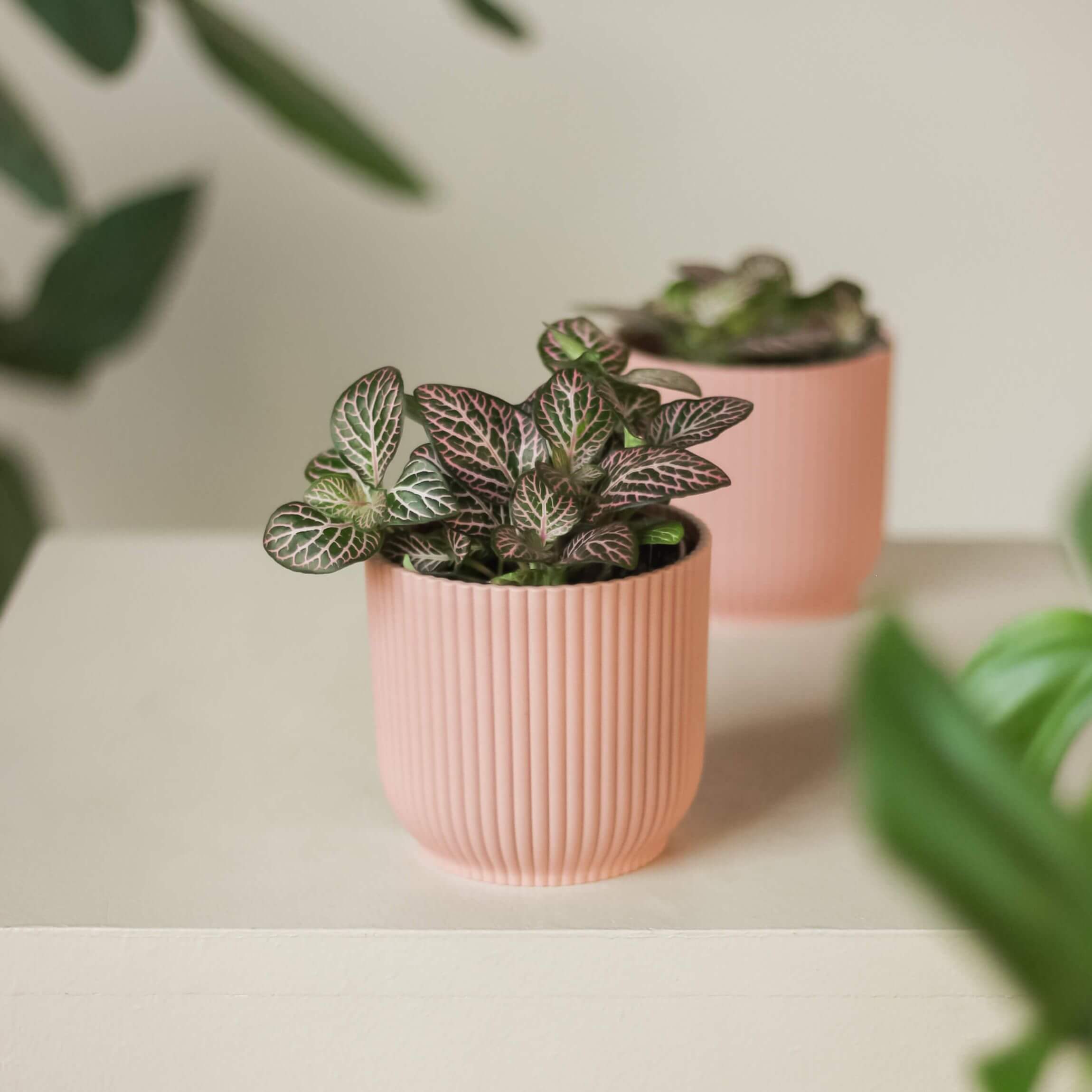
How to match a planter to the character of an interior?
Choosing a planter is not just a matter of size or functionality. It is a design decision that impacts the cohesion of the entire interior. A planter can discreetly blend into the background, letting the plant take center stage, or it can become a standalone sculptural accessory. It all depends on the aesthetic you want to achieve.
If you want to highlight the beauty of the plant itself, planters in muted colors with a simple form and matte finish work best. Such solutions are often used in medical spaces, where the aesthetic should be consistent and unobtrusive, and the greenery is intended to bring freshness and provide a natural counterpoint. In the plant arrangement for the LUX MED office interior in Warsaw we opted for minimalist white planters – they were meant not to contrast with other interior elements, but to emphasize the natural greenery of the plants and visually tie into the sterile, medical environment.
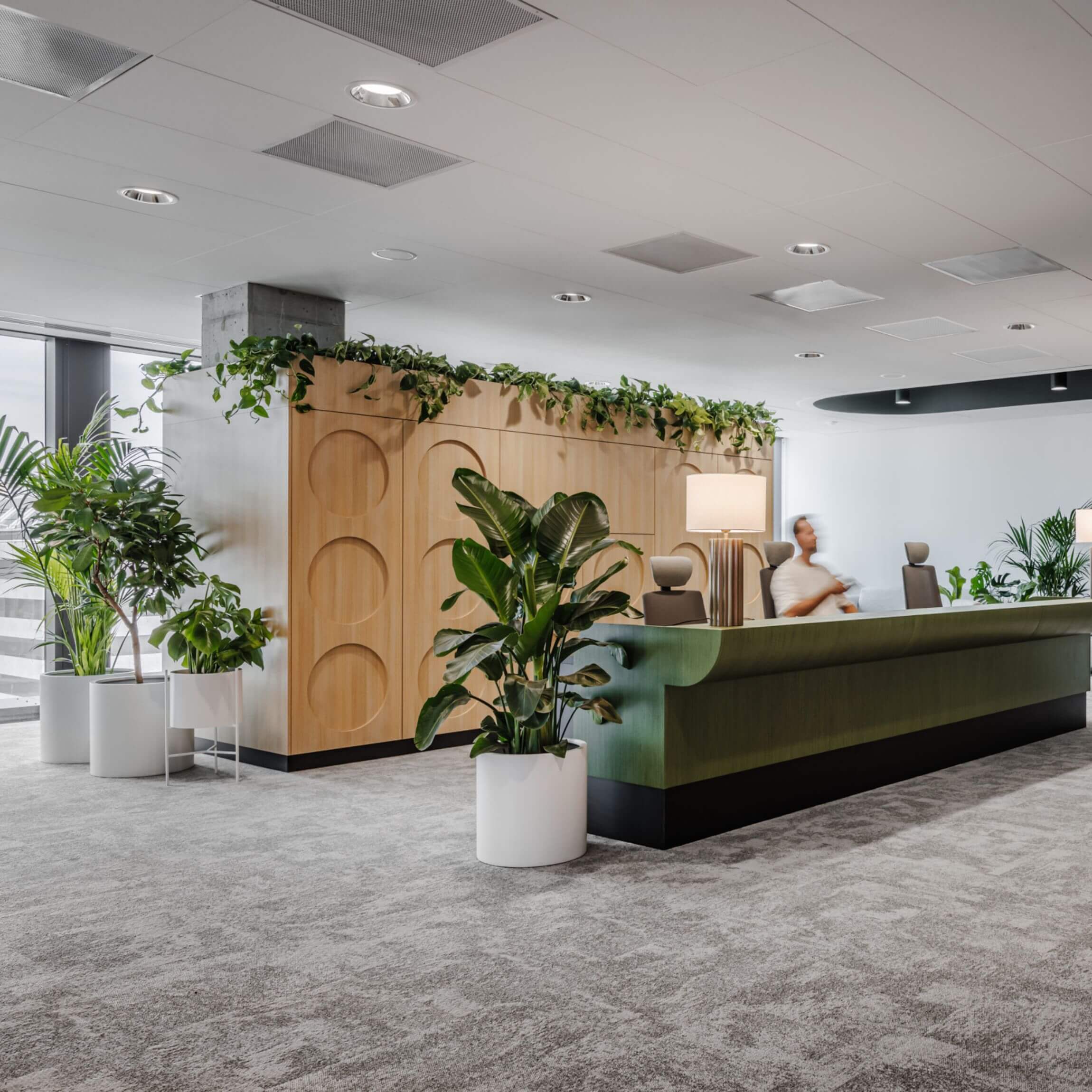
You can take a completely different approach to plant arrangements for a hotel lobby, restaurant, café, or other commercial facility. Here, a planter can play a sculptural role; introducing a custom color, texture, or shape to the space that becomes a visual hallmark of the venue. For the plant arrangement at PeDeT in Wrocław we chose hourglass-shaped planters. Their unusual, eye-catching shape corresponds with the modern decor of this iconic food court.
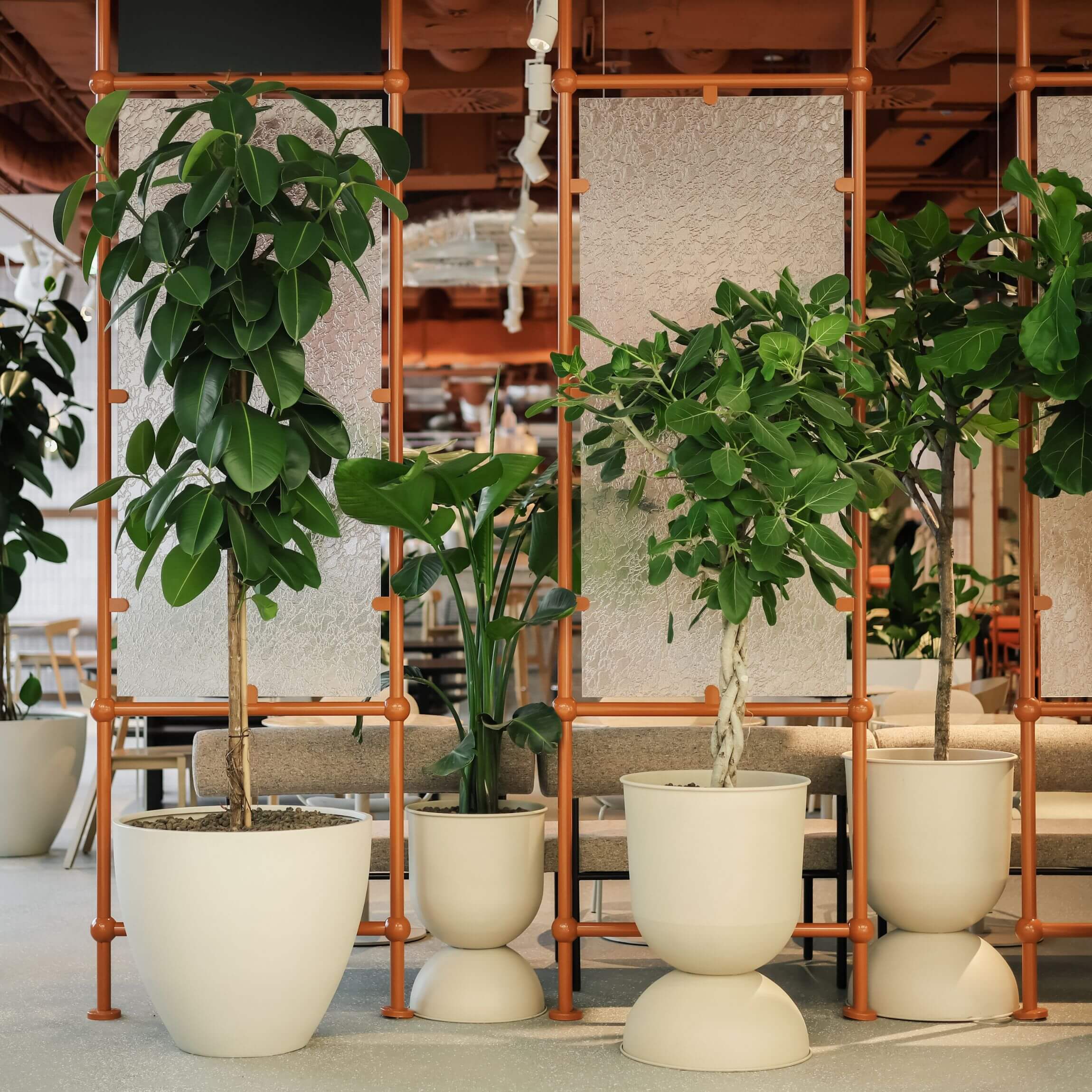
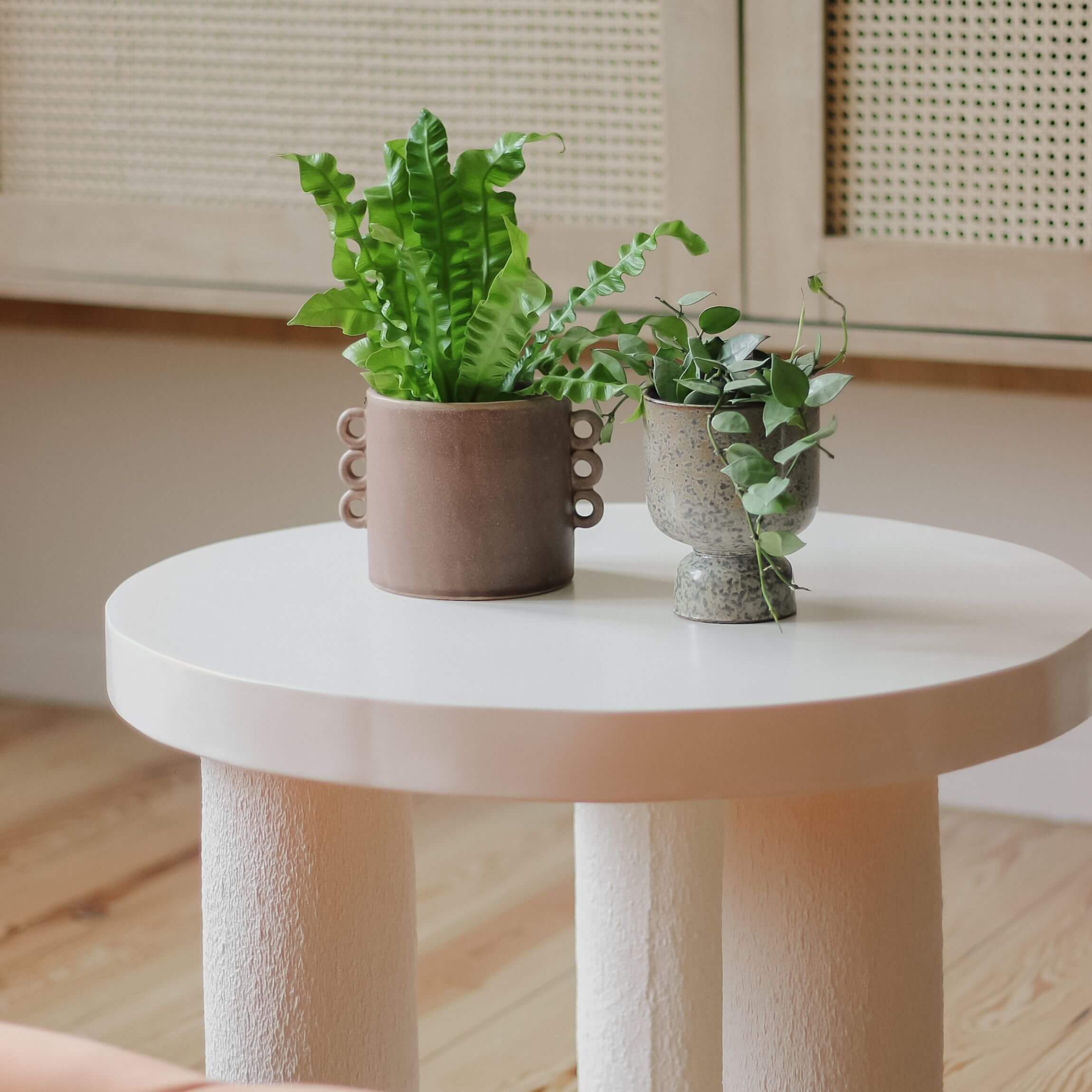
Planters can also be a way to personalize private spaces. In a plant arrangement project for a private apartment, we decided on ceramic forms with light, playful ornamentation, which gave the interior a more personal tone.
Greenery design for office and commercial interiors – Projekt Rośliny
If you want the green arrangement in your interior project to be aesthetic and functional, approach the topic holistically, combining knowledge of plant needs with knowledge of solutions, materials, furniture, and accessories – including planters. After reading this guide, the next good step is to check out our Plant Trendbook 2025, where we described the most interesting directions in interior greenery design for 2025. We have also included numerous tips and inspiration on how to give office greenery a functional setting.
Need support with selecting plants for an interior project? We would be happy to prepare a greenery concept for you and bring it to life. As Projekt Rośliny, we have been designing, implementing, and maintaining plant arrangements for 9 years in Wrocław,,Warsaw, and other Polish cities. Learn more about how our greenery projects for offices, commercial facilities, and public spaces are created.