Which plants to choose for the office? 5 species that best purify the air
How else can you improve air quality in the office? We know of plants that will not only enhance the aesthetics of your space but also help purify the air and maintain humidity.
Wondering how else you can improve the air quality in your office? Snake plants, golden pothos, dracaena, weeping figs, and dieffenbachia are plants that will not only enhance the aesthetics of your space but also help remove toxins from the air and maintain optimal humidity levels. The bonus? These species have simple requirements and are easy to care for!
Wondering how else you can improve the air quality in your office? Snake plants, golden pothos, dracaena, weeping figs, and dieffenbachia are plants that will not only enhance the aesthetics of your space but also help remove toxins from the air and maintain optimal humidity levels. The bonus? These species have simple requirements and are easy to care for!
The benefits of plants in the office
In a green office, you don't just work better—you breathe deeper, too. Numerous studies on the impact of plants on the environment and human health confirm this.
- The NASA Clean Air Study showed that houseplants can reduce airborne pathogens by approximately 50% compared to rooms without plants.
- According to research by the Chinese Academy of Sciences, the presence of plants helps create a healthier environment and reduces the risk of exposure to airborne diseases.
- According to research from the Agricultural University of Oslo, plants help reduce harmful volatile organic compounds, such as formaldehyde and benzene, found in the paints, carpets, and furniture of most buildings.
- The Human Spaces report found that indoor plants can increase employee productivity by 6% and creativity by as much as 15%.
Can plants replace an air purifier?
While plants do help remove harmful compounds, they cannot do so on the same scale as air purifiers and humidifiers. It is worth noting that most studies on the reduction of harmful compounds by plants have been conducted under controlled conditions that differ from those in homes or offices. Depending on the size of the room, air circulation, sources of pollution, and the number of plants in the space, the degree of pollution reduction will vary significantly.
Therefore, greenery in the office should be viewed as a supplementary solution, with health benefits that are more evident in terms of stress reduction and a positive impact on mental health and overall well-being.

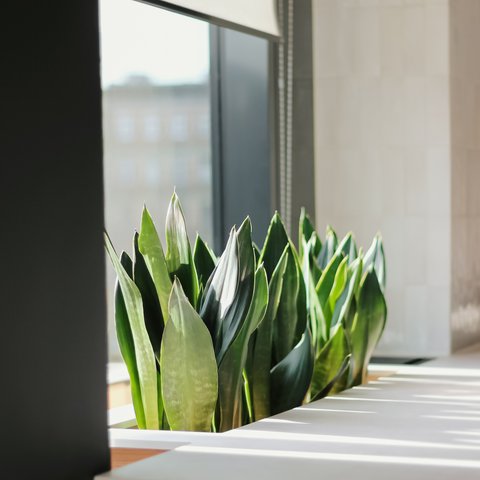
1. Sansevieria trifasciata
Also known as the snake plant or mother-in-law's tongue. You likely recognize it from government offices, workplaces, and other low-light areas where this species thrives. The snake plant has long, stiff, sword-shaped leaves, usually dark green with light stripes. It helps remove chemicals such as formaldehyde, benzene, toluene, xylene, and trichloroethylene from the air.
Interestingly, the snake plant uses CAM (Crassulacean Acid Metabolism) photosynthesis, which allows it to absorb carbon dioxide and release oxygen at night. This means that when you finish work and head home, the snake plant starts its night shift, purifying the office air in your absence.
2. Epipremnum aureum
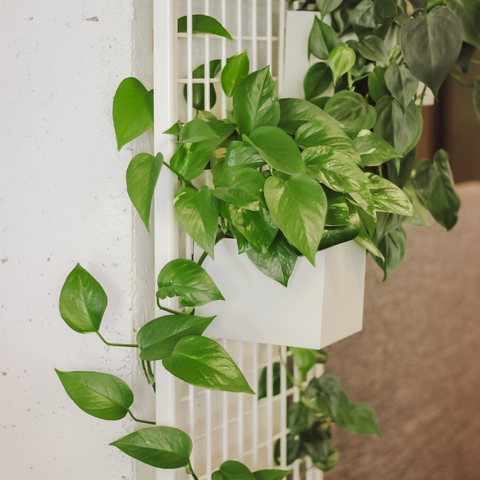
Devil's ivy, golden pothos, or simply "epi" grows exceptionally fast and can be grown as a hanging or climbing plant, making it easy to create an impressive plant arrangement. The plant has characteristic heart-shaped leaves with yellow or white spots and thrives in both bright and low-light conditions.
The more light it receives, the more likely it is to develop bright yellow spots on its leaves. Epipremnum not only helps filter formaldehyde, benzene, xylene, and toluene from the air, but it is also very easy to care for.
3. Dracaena
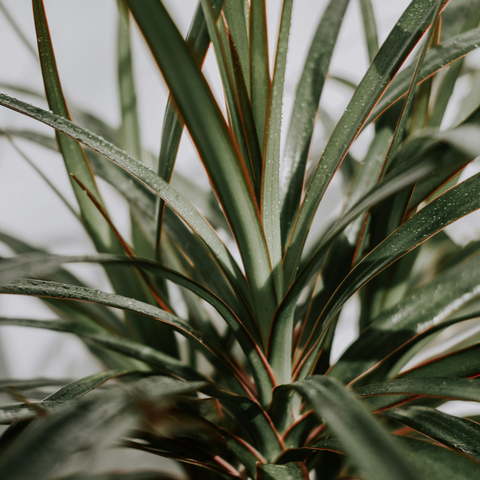
You can recognize a dracaena by its slender, sword-like leaves with lighter stripes. Its most popular varieties include Dracaena marginata, Dracaena fragrans, and Dracaena reflexa. This plant contributes to improved air quality by filtering out formaldehyde, benzene, trichloroethylene, toluene, and xylene. Additional benefits? It is easy to care for, tolerates moderate light and low humidity, so it won't hold a grudge even if you forget to water it.
4. Ficus benjamina
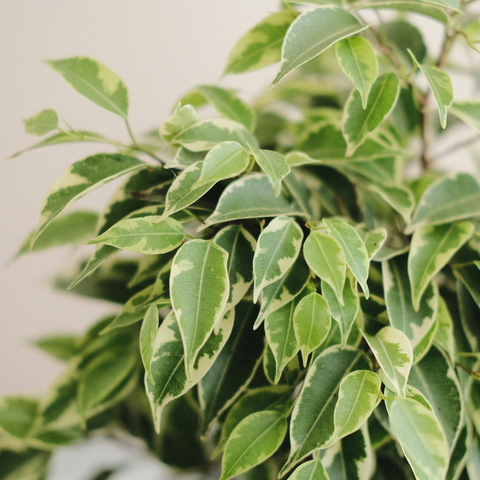
Also known as the weeping fig, the ficus is an elegant plant with glossy green leaves. Its decorative appearance and tree-like structure make it a perfect fit for biophilic interiors. The ficus can be grown as a smaller houseplant or as a small tree that serves as the centerpiece of a plant arrangement. Although it dislikes dry air and requires regular watering, it rewards its owners by helping to remove formaldehyde, benzene, and trichloroethylene from the air.
5. Dieffenbachia
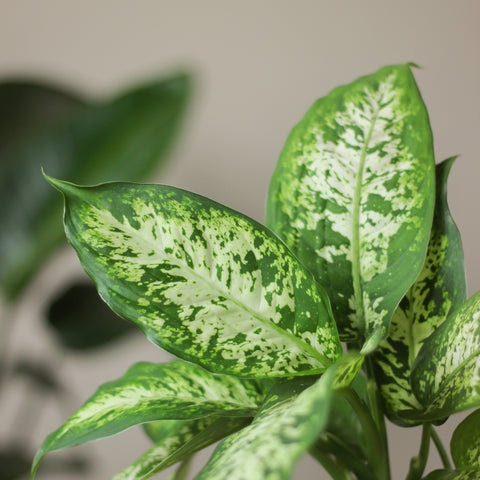
Dieffenbachia catches the eye with its large, decorative leaves featuring bright, irregular spots that add a touch of tropical charm to any office space. Depending on the conditions, this plant can reach up to 2 meters in height, but it will thrive even in rooms with low to medium light. It also effectively contributes to the removal of toluene and xylenes from the air. Importantly, dieffenbachia is highly toxic to animals, so if your office is pet-friendly, you should consider other species!
A green office - how to arrange it?
Adding plants to your office is a step toward a healthier and more productive work environment. Now that you know which species work best, it's time for the next step - designing your new green space. We would be happy to help you with that! Read about how our greenery projects are created, and see examples of functional biophilic interiorsthat we create for our clients. Your office could be one of them.
Sources: