

A quick guide on how to care for alocasias
Alocasias are plants that originated in tropical forests. These magnificent plants can sometimes be difficult to grow, so we want to offer a few tips on how to care for them.
Alocasias are stunning plants from the Araceae family that originated in distant tropical forests. There are over 70 species of Alocasia, and many of them have been reigning supreme in our homes in recent years, becoming true gems of our indoor jungles. We know that these magnificent plants can sometimes be a bit tricky to grow and care for, so we want to give you a few tips on how to look after your Alocasia and keep it happy in your own four walls.
By the way, have you heard about our 2025 Plant Trendbook, where we talk about how to green your interior in a sustainable and thoughtful way? You can download it for free here!
How to care for Alocasias and provide them with the best conditions for growth
Alocasias are tropical plants, and their natural habitat is quite vast, stretching from the eastern Himalayas through the tropical regions of Asia to Australia and the tropical areas of the western Pacific. As we all know, the climate in our country is nothing like the one in the Alocasia's natural environment, but we don't have to give up! There are a few simple ways to make these exotic beauties feel right at home and thrive!
The right substrate for Alocasia
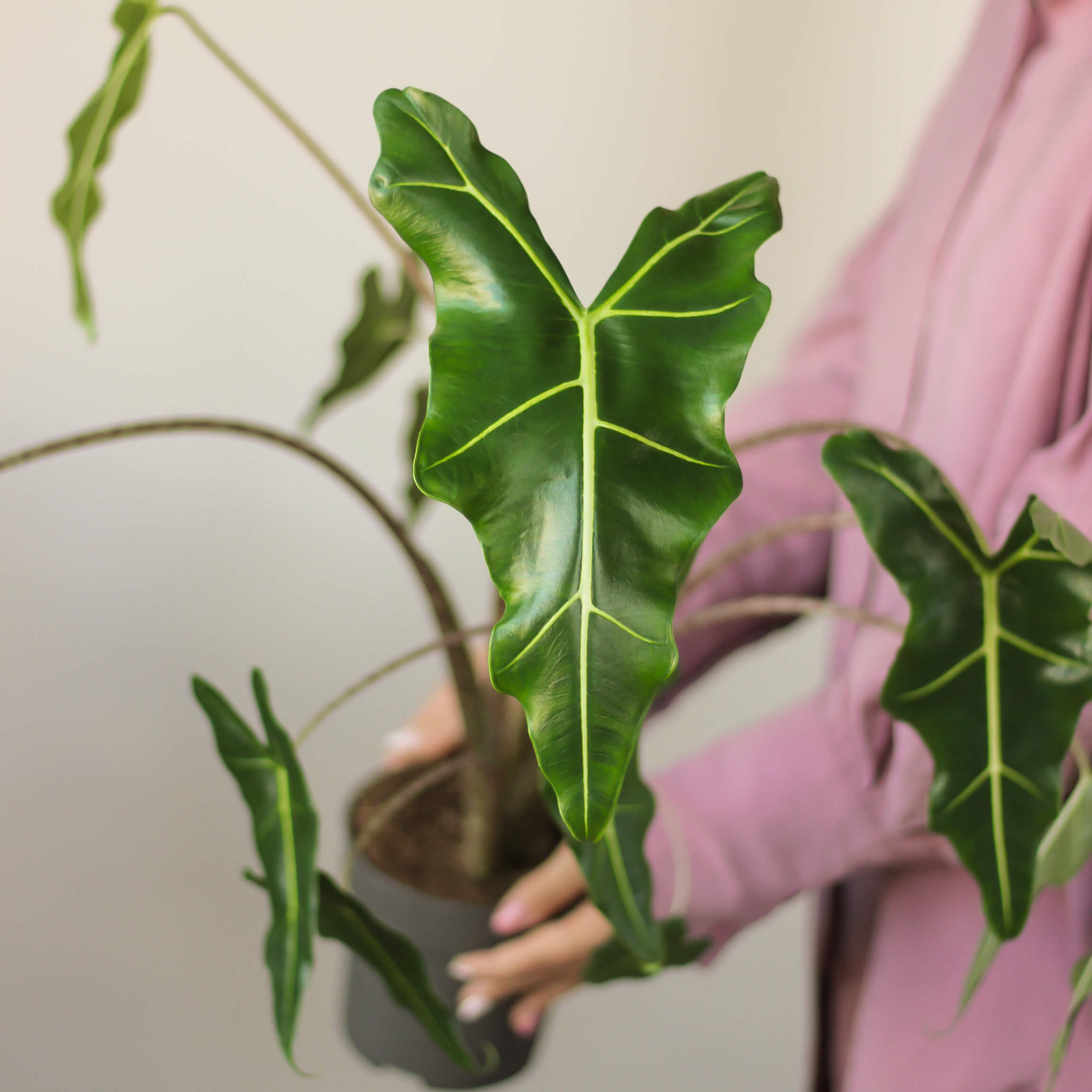
Every plant lover, whether advanced or just taking their first steps in the plant world, knows that one of the basics of caring for all houseplants is providing them with the right substrate. Alocasias need fertile, slightly acidic, but very well-draining soil. While they require consistently moist soil, they are also extremely sensitive to overwatering. When preparing the right mix, remember to include acidic peat and coconut fiber, as well as coconut chips and perlite to ensure proper drainage.
Not sure if the substrate you've chosen is right? Message us on Instagram (@projektrosliny), and we'll be happy to advise you!

Also, remember to give the plant a moment to acclimate—don't repot it the very first day it arrives home. Alocasias don't like traveling or changing locations, so give the newcomer a few days to catch its breath and go through a sort of quarantine (yes, we really don't like that word either...). Once you've chosen the perfect spot for your Alocasia, gently repot it into a slightly larger pot with fresh substrate and let it settle in for good.
Alocasias - the perfect spot
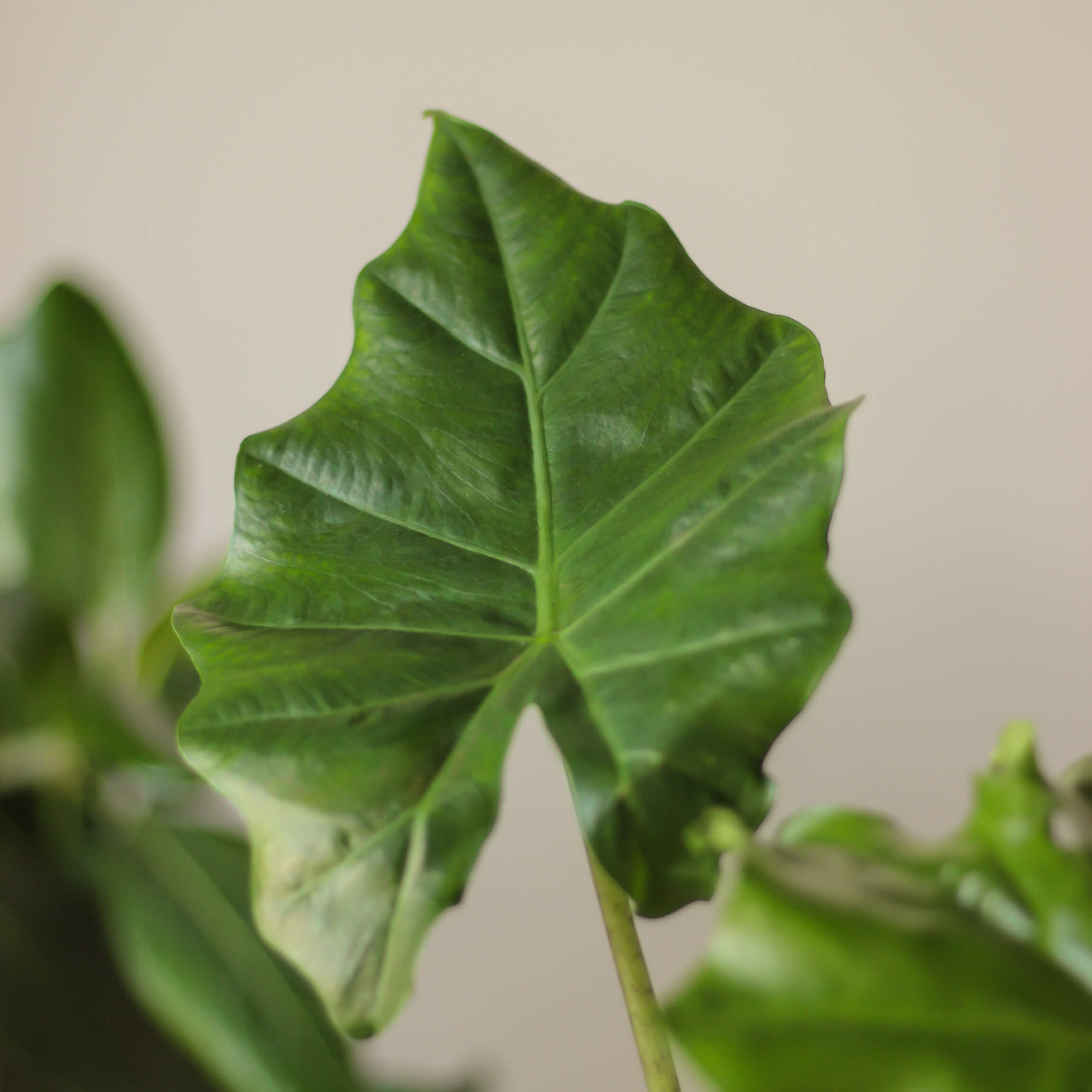
Speaking of the right spot... as tropical plants, Alocasias love sun and warmth, so we need to provide them with a bright and fairly warm location. However, remember to keep them away from radiators, because, aside from overwatering, dry air is what bothers these stars the most—but more on that in a moment. To make things a bit more challenging, the light must be soft and diffused so that intense sun rays don't burn the Alocasia's beautiful leaves, which are their greatest asset. You can diffuse the light with a sheer curtain or simply place the plant at the right distance from the window.
Air humidity
If you love plants and are constantly growing your home collection, you've surely heard about the importance of maintaining high air humidity for many plant species. Don't worry, you don't need to run around in a panic with a hygrometer every day or install complex NASA-grade weather stations. Just get a humidifier and place it near your Alocasia. A tray with wet expanded clay, where you can occasionally place your pots, also works great, giving your plants a kind of spa treatment. Then there's the topic of misting, which has been quite controversial lately. If there's really no other option, you can mist your Alocasias, but remember that hard tap water can leave unsightly spots on the leaves, and some species with more velvety leaf textures, such as Alocasia 'Frydek' or Alocasia 'Black Velvet', really don't like it at all.
Watering Alocasias
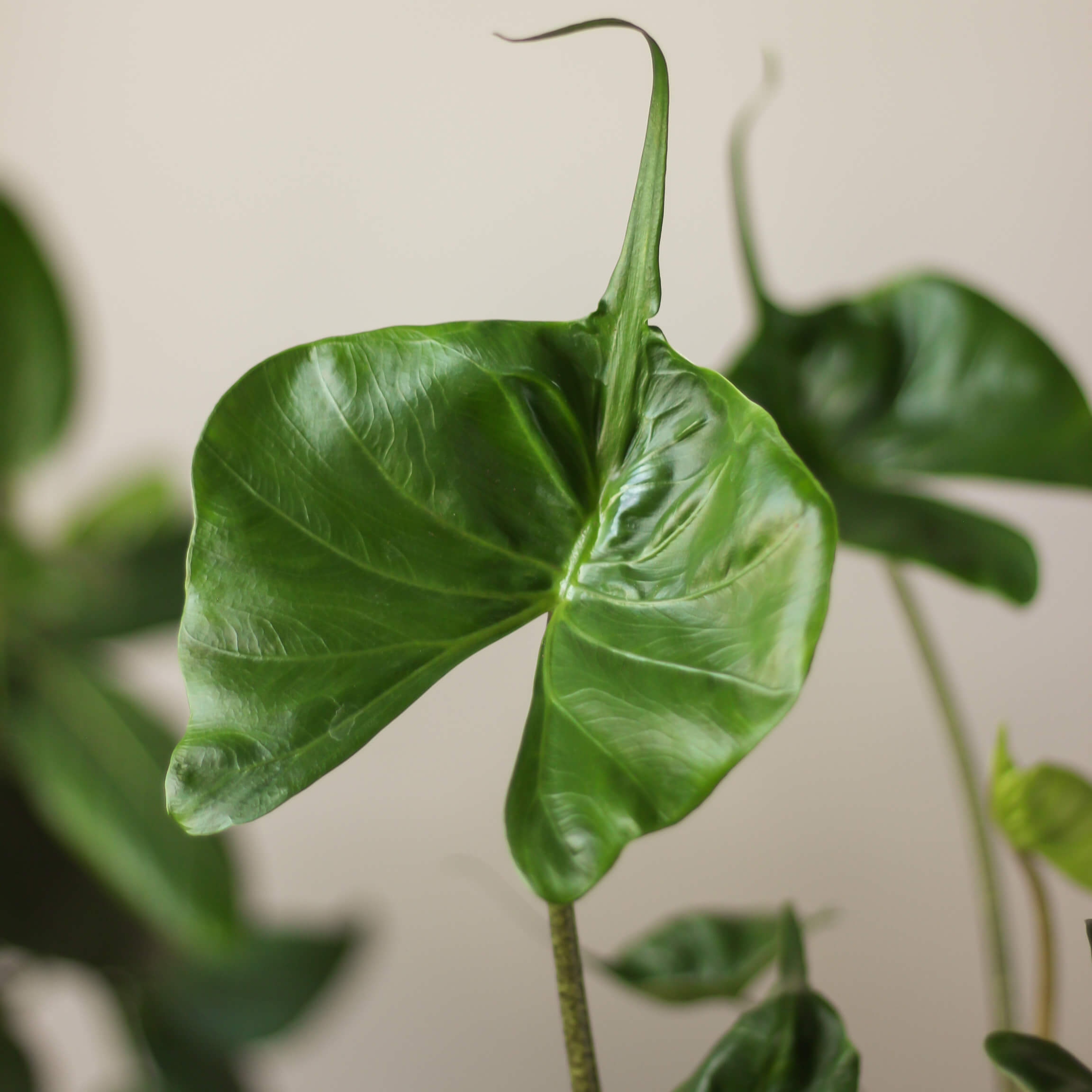
Since we're on the subject of water, we can't skip watering. There's no great philosophy here, but we should keep a few small things in mind. It is very important that the water is not cold. It should be at room temperature, preferably left to sit for a while, and if it's filtered, your Alocasias will jump for joy. It's not for us to judge the state of the tap water, especially since it varies depending on where you live, but if you drink filtered water yourself, your plants will be extremely grateful if you serve them the same. Back to Alocasias—the most important thing is not to be heavy-handed with watering, as overwatering and causing root rot is the fastest way to harm the plant. There's no point in writing out complicated watering calendars or installing advanced soil moisture sensors. We always have the simplest and most effective measurement method at hand—just stick your finger into the pot, and if the top layer of soil has dried out, you can gently water your Alocasia. During the growing season, from spring to autumn, it's also worth thinking about extra nutrition and occasionally feeding the plant with a suitable fertilizer.
Need extra support with your Alocasia? Or maybe you're not sure how to arrange it in your space? Read about our comprehensive plant consulting service!
dying alocasia leaves
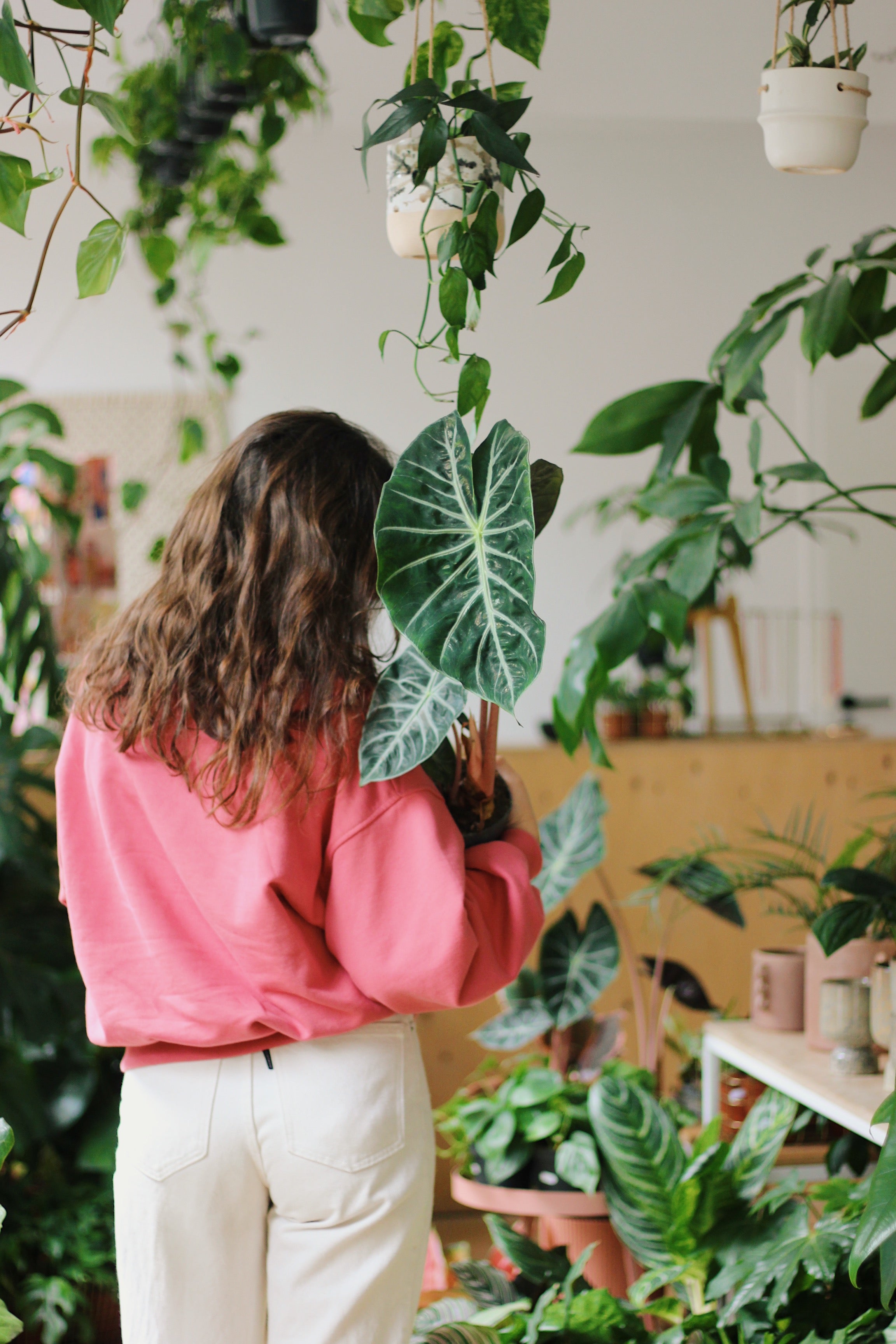
Finally, we would like to mention a phenomenon characteristic of alocasias: the regular dying off of the oldest leaves. First of all, don't worry, as this is completely normal for these plants. It may not sound very appealing, but the truth is that when an alocasia produces a new leaf, it slowly kills off the oldest one, drawing out its juices and vitality. That is why it is not worth cutting off such a leaf immediately; instead, let its successor absorb as many nutrients as possible. For this reason, individual alocasia plants usually have 3-4 leaves, and this is perfectly normal.
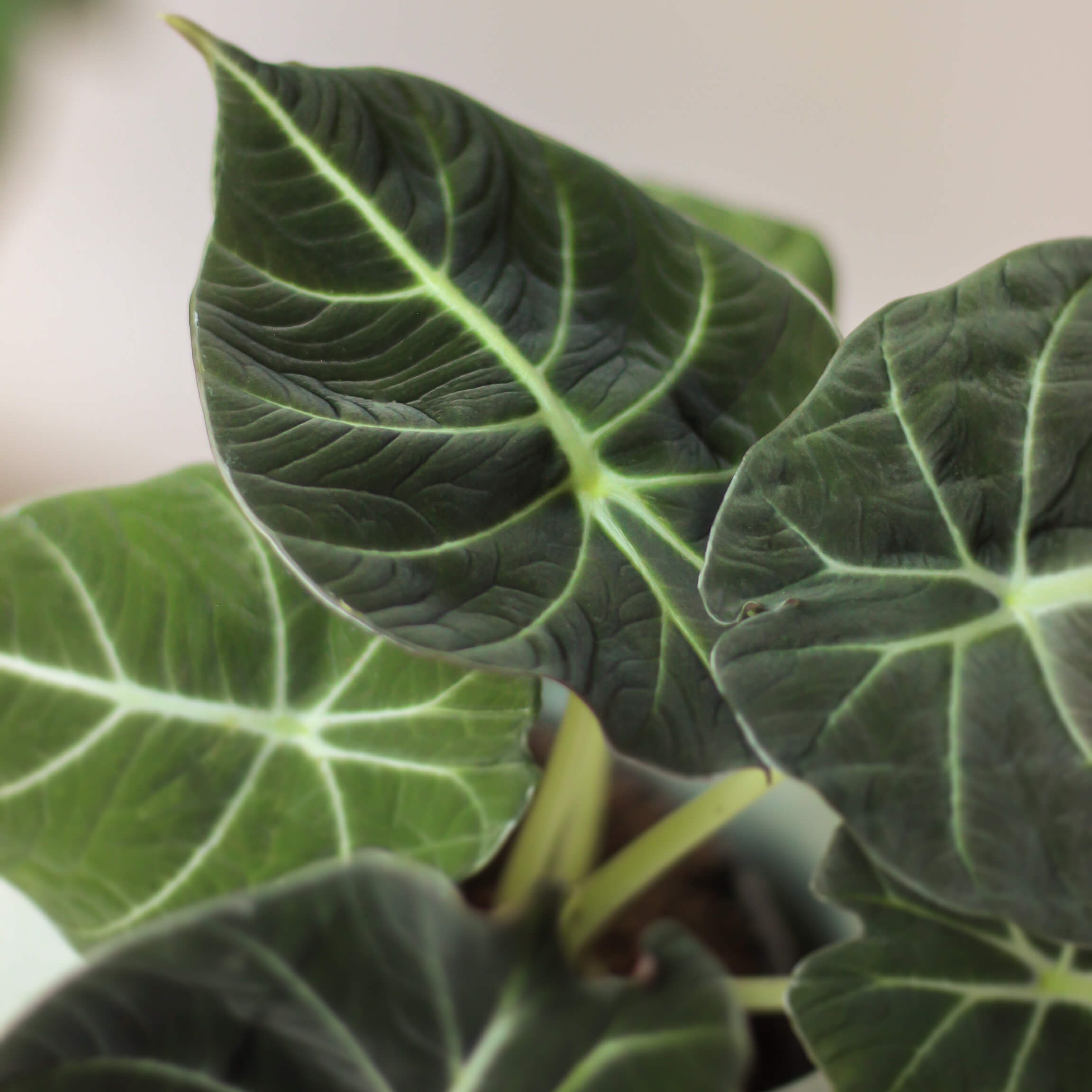
As you can see, caring for an alocasia is not an impossible mission, and with a little effort, these magnificent tropical plants can be an ornament to any home. You just need to give them a little attention, and they will reward you with their unique beauty. Every new leaf that appears will be like a burst of happiness, just like finding a gift under the Christmas tree. So don't hesitate any longer and choose your favorite variety—whether it's the colorful "Pink Dragon," the fun "Stingray," or the majestic "Portodora" depends entirely on your personal taste and imagination, as the selection is truly stunning.


