

Aglaonema – the perfect plant
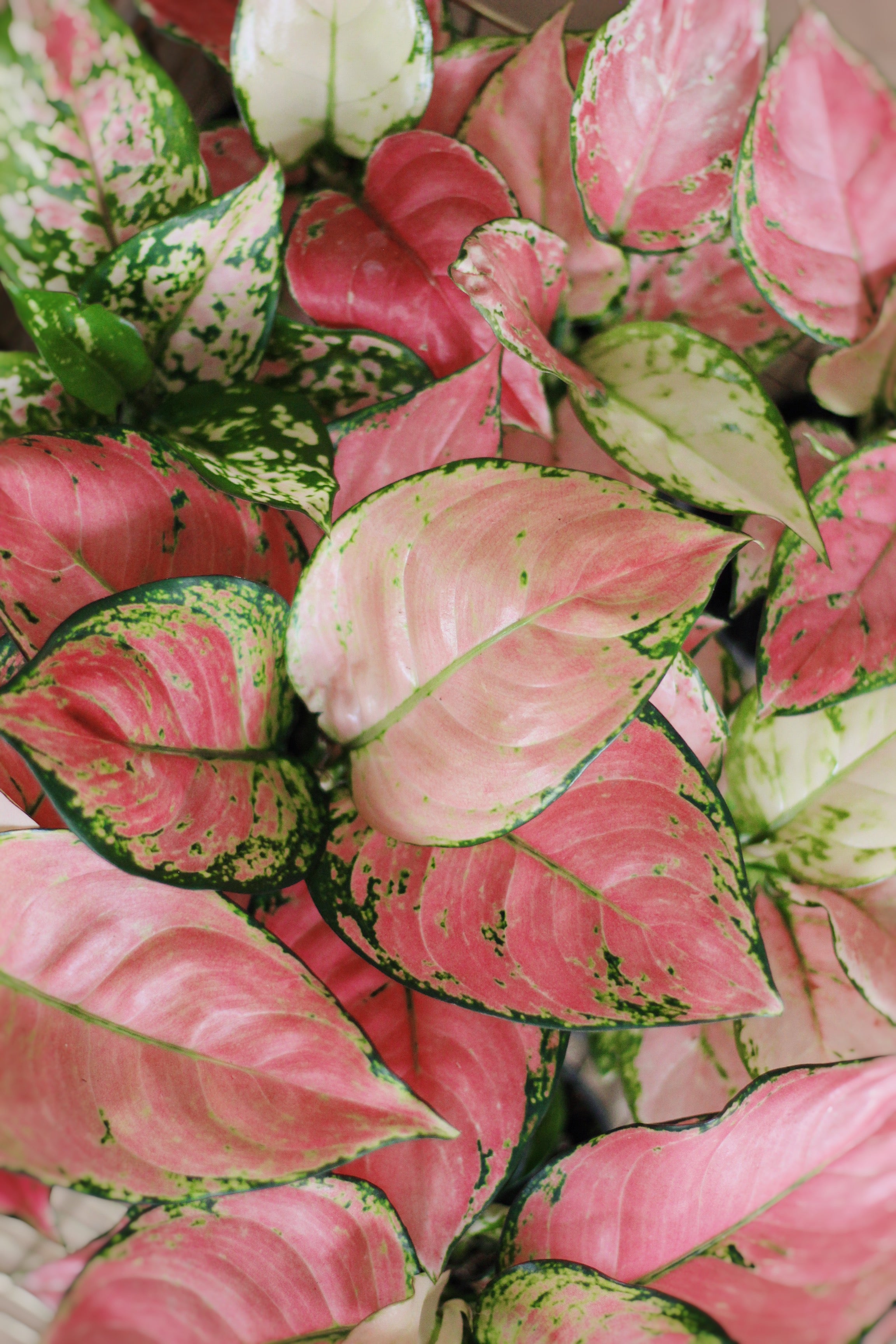
Aglaonemas stand out with their appearance, catching the eye from afar and delighting with their wild coloration. Learn how to care for aglaonemas!
As befits plants from the Araceae family, aglaonemas definitely stand out with their appearance and catch the eye from afar. While alocasias and philodendrons intrigue us with their gigantic size, fancy shapes, or interesting leaf textures, aglaonemas simply delight with their wild coloration. What else do we love them for? These exotic beauties are true Amazons—they will survive and forgive us a lot, and they are able to adapt to most inconveniences. Lack of light, no air humidifier... The undemanding aglaonemas say: 'Okay, no problem, we'll keep growing!'
Fabulously colorful Asian dragons
The homeland of these unique aroids is the tropical regions of Southeast Asia, stretching from India, through Indonesia and the Philippines, to Papua New Guinea. There, aglaonemas grow in warm, humid, and rather shaded spots in rainforests—they are particularly fond of ravines, waterfall mists, and stream banks. Interestingly, some aglaonemas in their natural habitat develop a trunk and reach up to 2 meters in height. Another interesting fact is the name of these plants, which combines two Greek words: aglaos —meaning bright and beautiful, and nema —meaning thread. The etymology leads us to the structure of aglaonema flowers, which are shaped like a long white spadix surrounded by a green or pinkish "cloak."
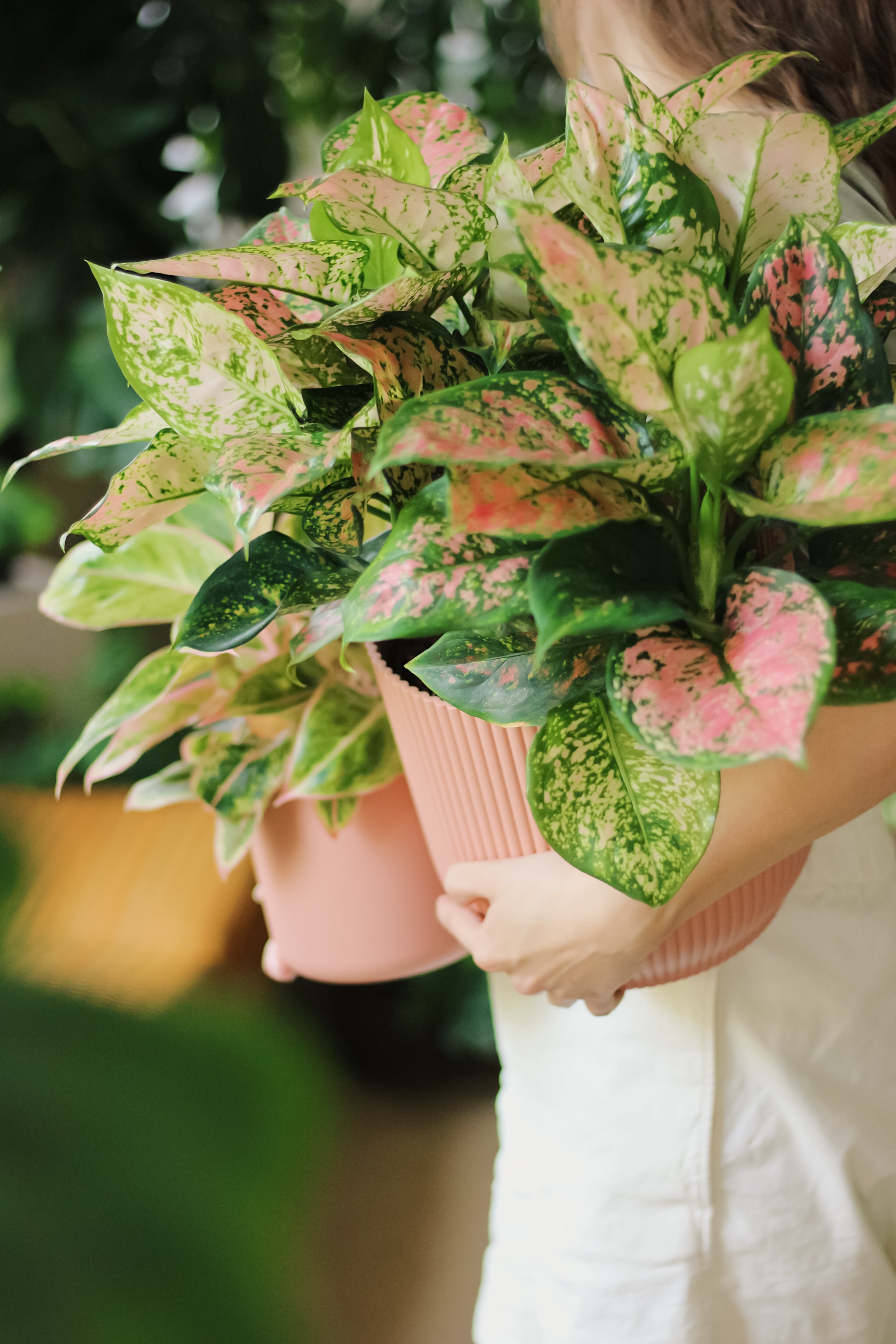
However, the feature that captivates us most in these wonderful plants is the colorful painting of their leaves. From calm, silvery-gray landscapes on dark green blades, as in the 'Cutlass' or 'Maria' varieties, through fiery crimson spots that make the leaves look like dragon scales, as in 'Red Dragon' or 'Piranha', to a totally wild cocktail of almost fluorescent colors, which we get from, for example, 'Orange Explosion'. A characteristic feature of aglaonema coloration is also the contrasting leaf margin. It can stand out like evening lipstick—e.g., in 'Red Lipstick' or 'King of Siam'—or a delicate pink lip liner, as in 'Salmon Fantasy' and 'Pink Aurora'.
How to support these masters of adaptation?
One could talk endlessly about the variations of aglaonema cultivars... fortunately, the opposite is true when it comes to care! Although they are definitely tropical plants, their adaptive skills are truly outstanding. You just need to remember a few basic things so as not to hinder their peaceful, almost self-sufficient life on our windowsills and plant stands.
soil
Let's start with the basics: the right soil mix. An aglaonema will be satisfied with good-quality universal potting soil: fertile, peat-based, and necessarily permeable, with a structure loosened by, for example, perlite or a small addition of sand. Such soil will maintain moderate moisture but will also allow air to reach the roots. Remember that aglaonemas do not like waterlogging (more on that in a moment), so it is worth pouring a generous handful of expanded clay into the bottom of the pot to ensure good drainage. To prevent potential fungal diseases, it is worth mixing a little activated carbon into the substrate, which will create an "anti-fungal barrier" around the roots.
water
There is no great philosophy here—the only and most important rule is not to overdo it in either direction, although of two evils, an aglaonema will tolerate temporary drought better than overwatering. If we go away for the weekend and forget about it, we don't have to worry that there won't be anything left to come back to after a few days. However, this plant has quite thick, fleshy roots that are prone to rotting if there is frequent excess water. Therefore, let's water it in moderation, preferably when the top layer of the substrate has dried out, trying to keep the soil slightly moist at all times. Let's use soft, room-temperature water and be careful that excess water does not accumulate in the saucer. From March to October, it is worth feeding the aglaonema with a natural fertilizer, e.g., our 'drop of goodness'.
position
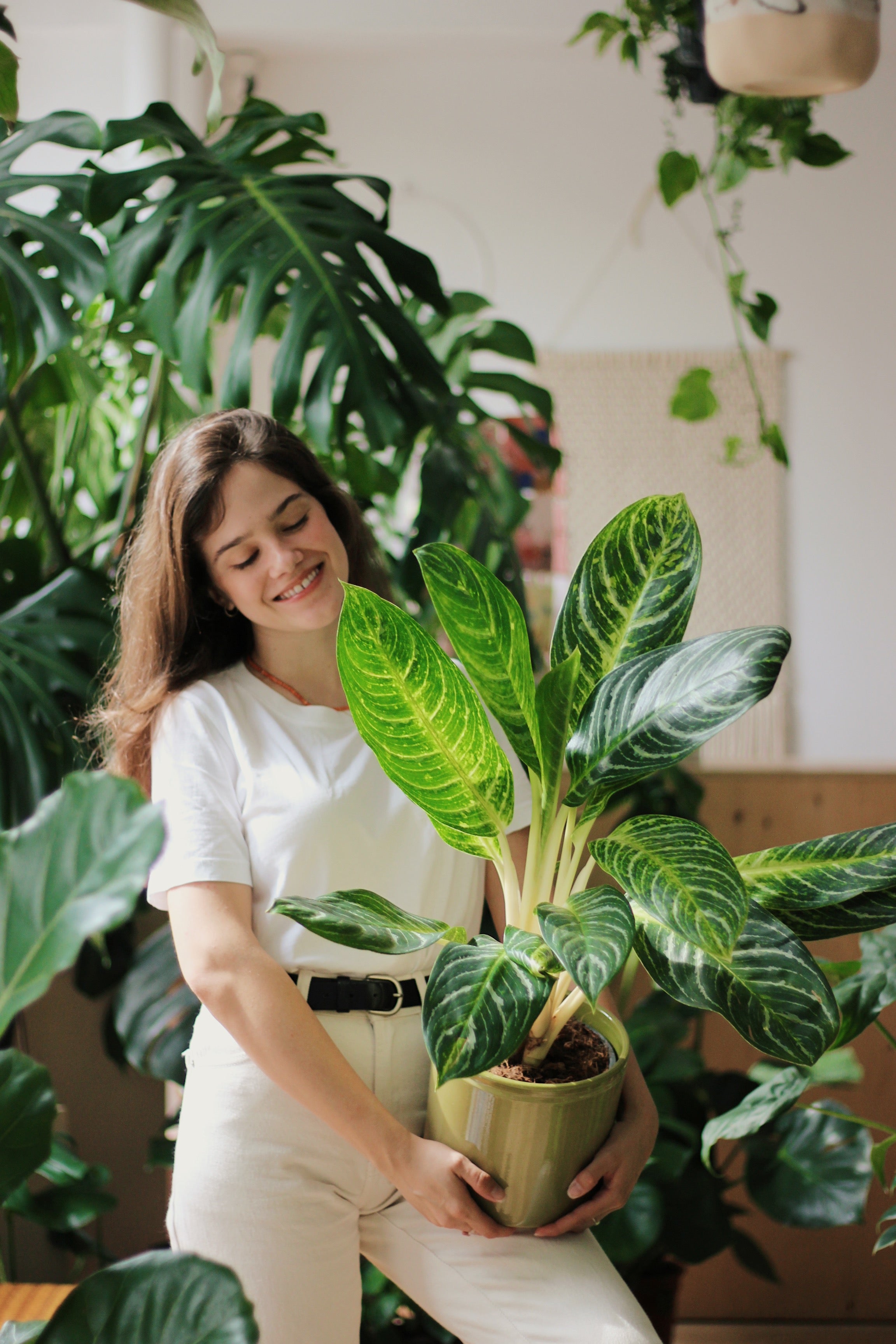
An aglaonema will be delighted with a bright spot with gentle, diffused light, but unlike other intensely colored plants, it will also cope in a location with less light access without losing its amazing colors. We can safely invite it to an east-facing windowsill or even a north-facing bedroom. If our room is really heavily shaded, it will be safe to choose one of the varieties most resistant to light deficiency, such as 'Silver Bay' or 'Silver Queen'. Note—most aglaonemas "follow the light," meaning they turn their stems and leaves toward it. If we want the plant to have a regularly spreading habit, let's place it in an evenly lit spot or gently rotate the pot from time to time.
air
Although in nature it is a regular visitor to humid habitats, it won't mind if we don't provide such conditions within our four walls. If we own an air humidifier, the aglaonema will be overjoyed and will certainly reward us with shiny leaves, but it will also easily adapt to the average humidity of a home atmosphere, and even to air-conditioned office air. Misting the leaves is generally not recommended, but it is worth giving them a little dusting shower from time to time.
what else?
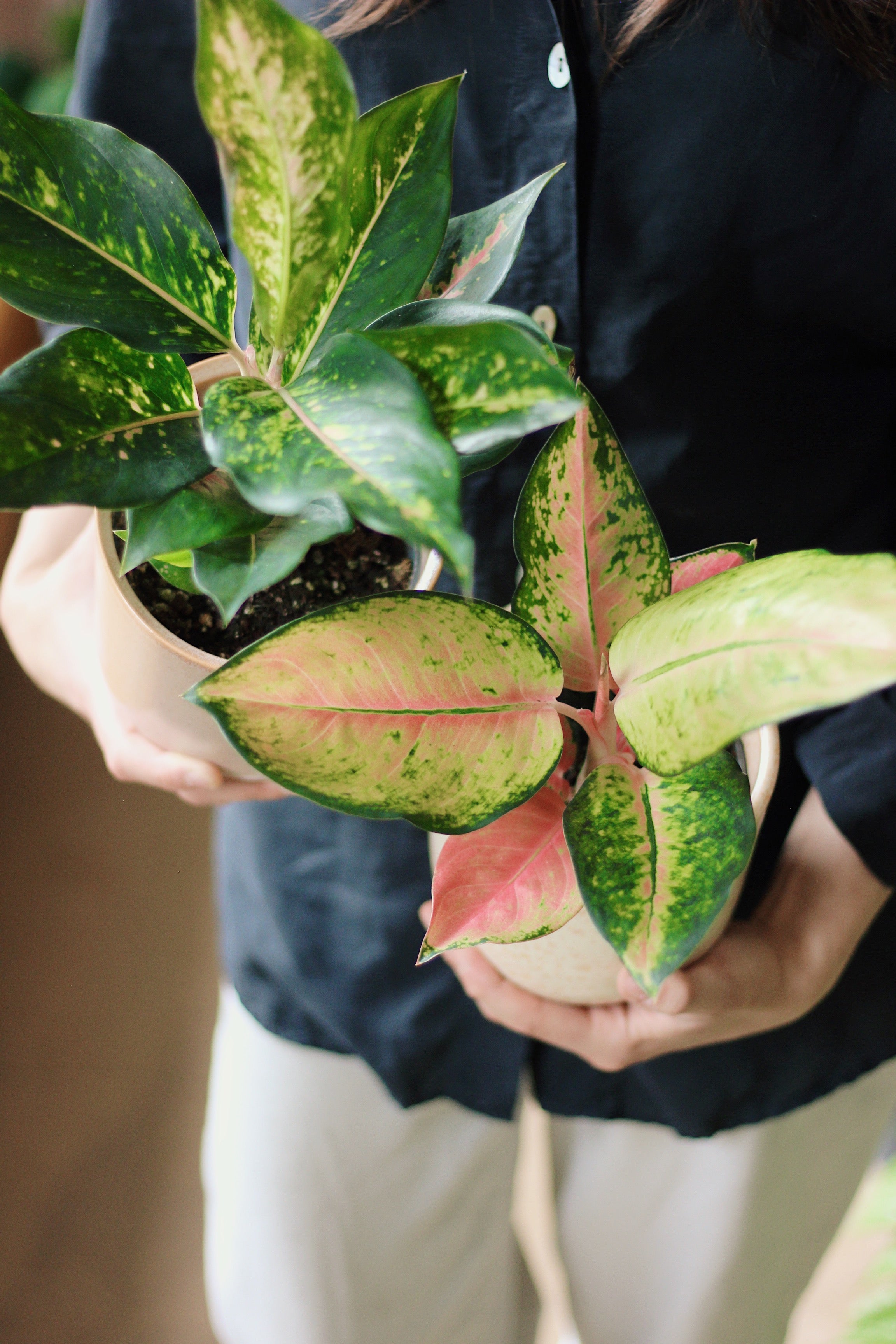
For an aglaonema, the natural growth process is to slowly climb upwards and invest the greatest amounts of energy in the development of young leaves, so from time to time, the plant gets rid of 1-2 of the oldest leaves at the bottom. It is worth remembering it during regular spring repotting, because if we give it a little more space, we will be able to enjoy new shoots emerging from the underground rhizomes. The "youngsters," in turn, will nicely thicken the habit of the entire plant, filling in the gaps left by the oldest leaves.
Don't have an aglaonema in your plant collection yet? Are you wondering which species to start your green adventure with? Or maybe you are looking for the perfect plant for an impressive (and durable) gift? In response to every question, we recommend this colorful beauty—maybe start with a 'Red Zirkon' or 'Crimson Love' edition? Show off your phenomenal specimens!


