Large office plants – top 10 plants that make an impression
Large office plants and the top 10 most impressive varieties! Here is a list of large plants that reach 1-2 meters in height, including low-maintenance species.
It’s simple. You want your office to impress everyone who walks through the door. You don't have time for renovations or time-consuming space rearrangements, so how about enriching your office space with large plants? XL-sized plants will help you create a layout that is hard to look away from. They are also perfect for filling empty space without cluttering it with too many elements. Below, you will find a list of ten species of large office plants that can reach heights of 1 to 2 meters indoors—including low-maintenance varieties perfect for busy professionals.
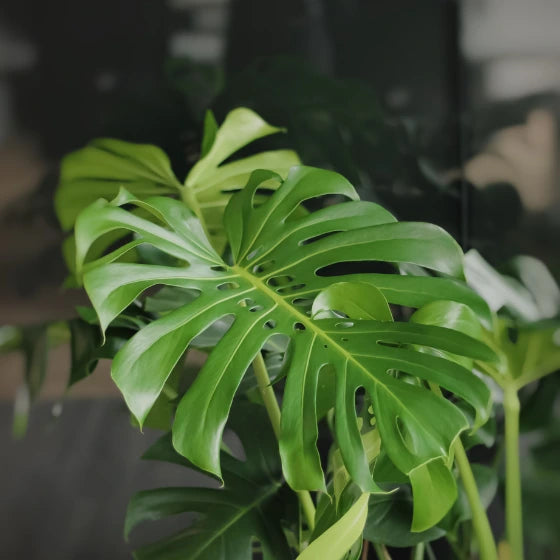
1. Monstera deliciosa - a classic for office interiors
The popularity of the monstera is no accident—it is a plant with an original, tropical look, featuring large leaves adorned with striking holes. It is low-maintenance, and while it grows fastest in bright spots, it will also be happy in the darker corners of an office. Initially, its leaves may be completely smooth, but once mature and with good access to light, the monstera will produce larger, hole-filled leaves. In office conditions, it reaches an average height of 4-5 meters, while in the wild, it can grow up to 20 meters. Wild monsteras also bear fruit, though eating them is not recommended as they can irritate the stomach.
Monstera deliciosa - requirements
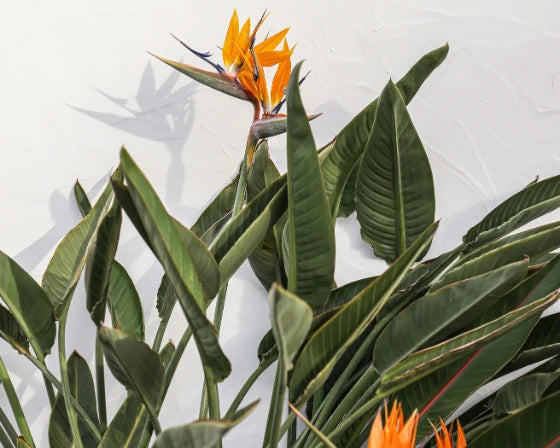
2. Strelitzia nicolai - a tropical beauty
The large, paddle-shaped leaves of the strelitzia evoke the flora and fauna of a tropical forest. This is why it is commonly called the bird of paradise. In favorable conditions, the strelitzia can reach 1 to 1.5 meters in height, and with good access to light and proper humidity, it will reward you with flowers that add even more charm. Its cousin is the equally popular Strelitzia reginae.
Strelitzia nicolai - requirements
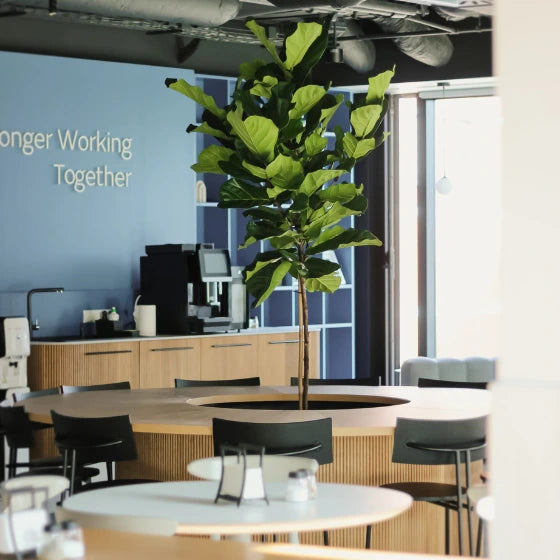
3. Ficus lyrata - a piece of the forest in your office
Ficus lyrata, also known as the fiddle-leaf fig, is perfect as a centerpiece for office decor. This variety of ficus has dense, full coverage that brings to mind tree canopies. In nature, it is found mostly in western and central Africa, where it reaches over 12 meters in height. Indoors, it can grow up to 2 meters, but its leaves alone can measure 20 to 25 cm in length.
Ficus lyrata - requirements
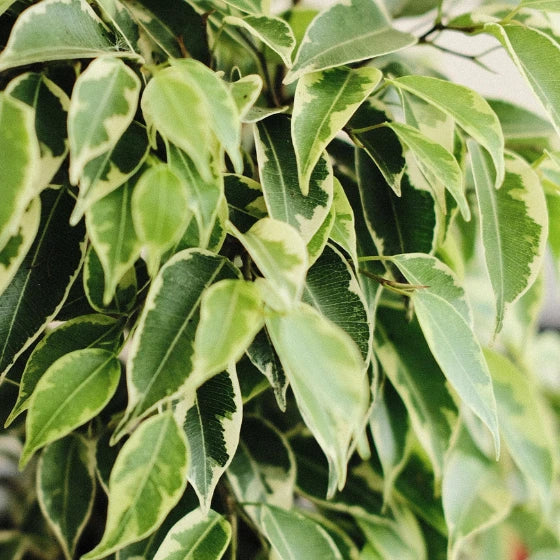
4. Ficus benjamina - a staple in public offices
It would seem that the ficus loves libraries, clinics, and other public spaces. And for good reason—these spaces often offer it ideal growth conditions, primarily constant access to natural light through large windows. Ficus benjamina loves bright but not directly sunny spots, making it an ideal choice for offices with large windows. It is characterized by intensely green leaves that form a beautiful, spreading canopy. It can be a temperamental plant, but its attractive appearance and size—2 to 3 meters in height in home conditions—reward diligent care.
Ficus benjamina - requirements
5. Bucida buceras - black olive tree
In nature, Bucida buceras can reach 20 to 25 meters in height, but in an "office" setting, it usually grows to about a meter. The bucida is characterized by small, oval leaves and relatively thin stems, which makes the plant resemble a tree. Indoors, it grows slowly, so it won't require frequent relocation or pruning. Occasional trimming, however, can help maintain its regular, tree-like shape.
Bucida buceras - requirements
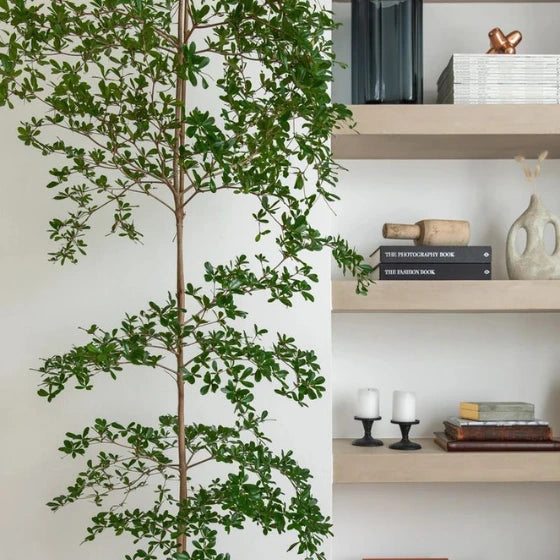
(source: plantdrop.co.uk)
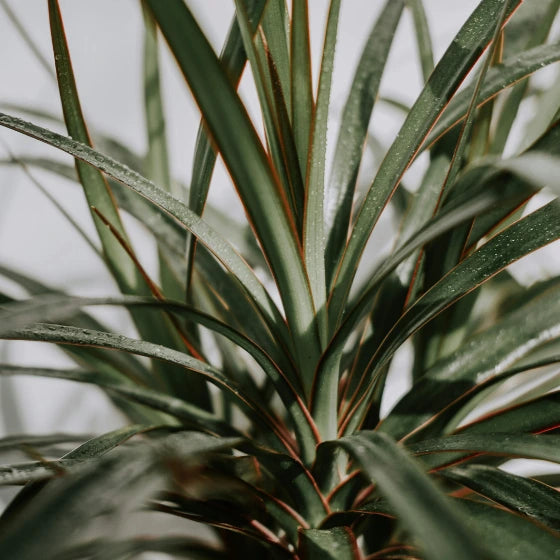
6. Dracaena - large office plants for a tropical vacation vibe
The dracaena is a plant with long, slender leaves that, depending on the variety, come in various shades of green with stripes of yellow and red. Although it grows in subtropical regions in nature, it adapts very well to office conditions. It is a resilient plant that can forgive you if you forget to water it. Its appearance resembles a palm tree, allowing it to bring a bit of a tropical climate into the office. Dracaena varieties reach an average height of 80-100 cm.
Dracaena - requirements
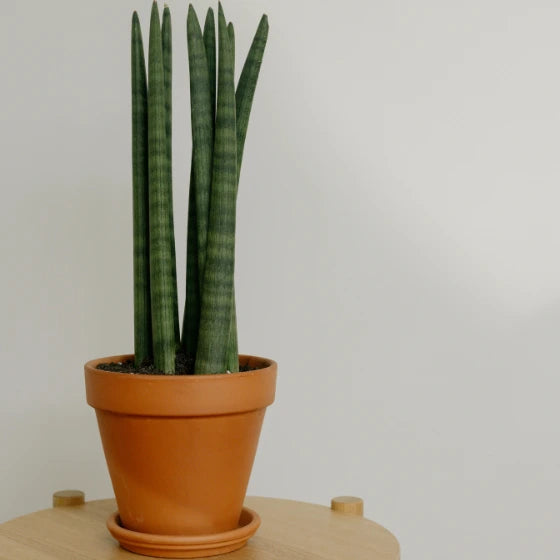
Sansevieria zeylanica, also known as snake plant, catches the eye with its thick, sword-shaped leaves featuring transverse stripes. The snake plant is one of the most resilient houseplants. It is unfussy and can survive long periods of drought due to its ability to store large amounts of water in its leaves. It also requires no complicated care. It is worth placing it in shadier areas of the office where other plant species might struggle to thrive. More inspiration for arranging plants in a dark office can be found here.
Sansevieria zeylanica - requirements
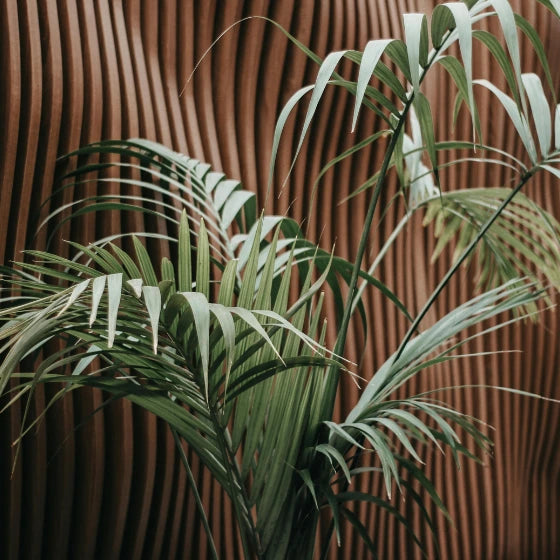
8. Kentia howea - a visitor from Australia
Queen Victoria of England was a huge fan of this palm, insisting that kentias be placed around her coffin after her death. The kentia arrived in Great Britain from Australia in the late 19th century and quickly gained popularity among the British aristocracy, becoming an exotic status symbol while bravely coping with the limited light in Victorian homes. Today, the kentia is also well-suited for shaded offices, and all it really needs to be happy is humid air. In exceptionally favorable conditions, it can reach 2 to 2.5 meters in height.
Kentia howea - requirements
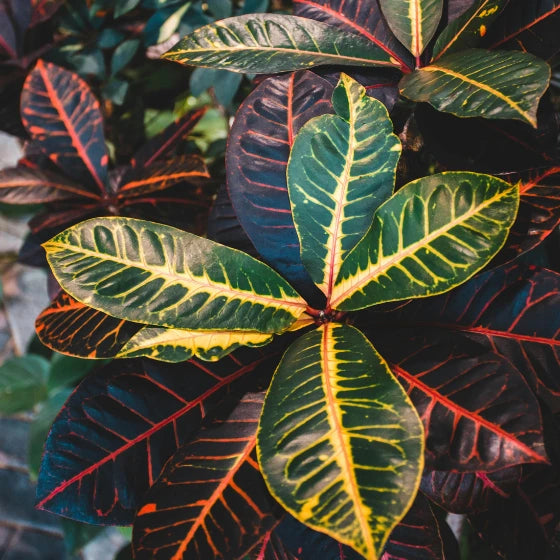
Want to bring more color into your office? A croton can help you with that. Depending on the amount of daylight, its dense leaves take on various shades of green, red, yellow, and orange, creating a colorful mosaic that visually enlivens the space. In nature, the croton grows in Polynesia and Indonesia, reaching heights of up to 3 meters. In office conditions, it usually grows to about a meter. Although it needs relatively plenty of light and humid air, it can "remind" its caretakers of its needs. When a croton lacks water, it begins to droop its leaves.
Croton - requirements
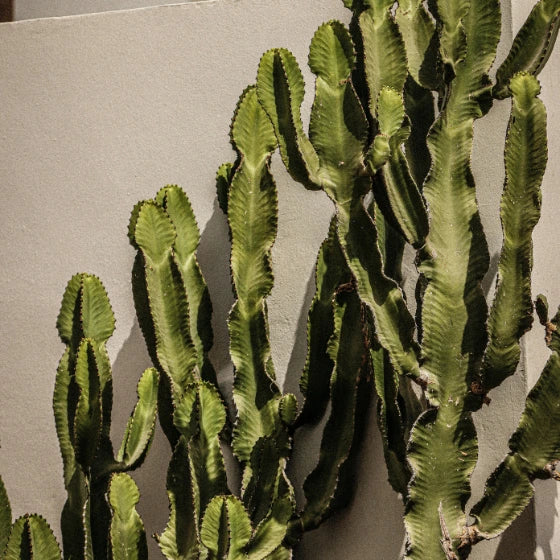
In appearance, the euphorbia resembles a cactus, but its origins are closer to other succulents. It is characterized by tall stems with an irregular texture and small thorns. During the season from early spring to mid-summer, it can also delight with small, pink flowers. In indoor spaces, it usually reaches between 20 cm and 2 meters. This plant belongs to the spurge family, which means it has the ability to produce milky sap. It is highly toxic to animals and protects the plant from pests in nature. If your office is pet-friendly, it is better to choose a different species - here you will find a list of plants safe for animals.
Euphorbia - requirements
Large office plants - how to care for them?
Large office plants can completely transform an office space, but to maintain their striking appearance, you need to devote some attention to them. Although each of the mentioned large plant species has its own specific requirements, they share a common denominator: their leaves. Due to their size, they will accumulate more dust and grime, which can negatively affect the photosynthesis process. It is worth wiping them regularly with a damp cloth (for example, microfiber) to help the plant breathe and maintain its aesthetic appeal. Also, check out this article to avoid these 6 non-obvious mistakes in DIY home and office plant care.
Large office plants - care assistance
If you lack the time for maintenance or are worried that you won't be able to handle more demanding species, take advantage of our comprehensive office plant care service. You can also commission us for office plant arrangement - we will help you choose the right species and solutions for your space's conditions and carry out the entire implementation process.
Check out our portfolio and our past projects!
Large office plants - frequently asked questions
What are the main benefits of introducing large plants into the office?
Large plants can transform an office space, giving it a more attractive and tropical look. They help fill empty areas and do not require time-consuming rearrangements. Additionally, they serve a decorative function and promote a better sense of well-being.
Which species of large plants are recommended for offices and why?
Recommended plants include Monstera deliciosa, Strelitzia nicolai, and Ficus lyrata. These are low-maintenance species that adapt perfectly to office conditions while making an impression with their appearance and size.
Why is it worth investing in large plants and flowers for the office?
Large plants are a simple and effective way to improve office aesthetics. They do not require significant financial investment or renovations, and their presence positively influences the atmosphere and how the space is perceived by employees and guests.
What are the requirements of the large office plants mentioned in the article?
Plants such as Dracaena, Sansevieria zeylanica, or Howea forsteriana prefer semi-shaded to bright locations and moderate watering. It is also important to regularly wipe the leaves to remove dust and support the photosynthesis process.