

Ceropegia woodii. Easy to fall in love with, even easier to care for
Ceropegia woodii – how to care for it? This romantic little plant has already captured the hearts of plant lovers everywhere! Learn how to take care of it!
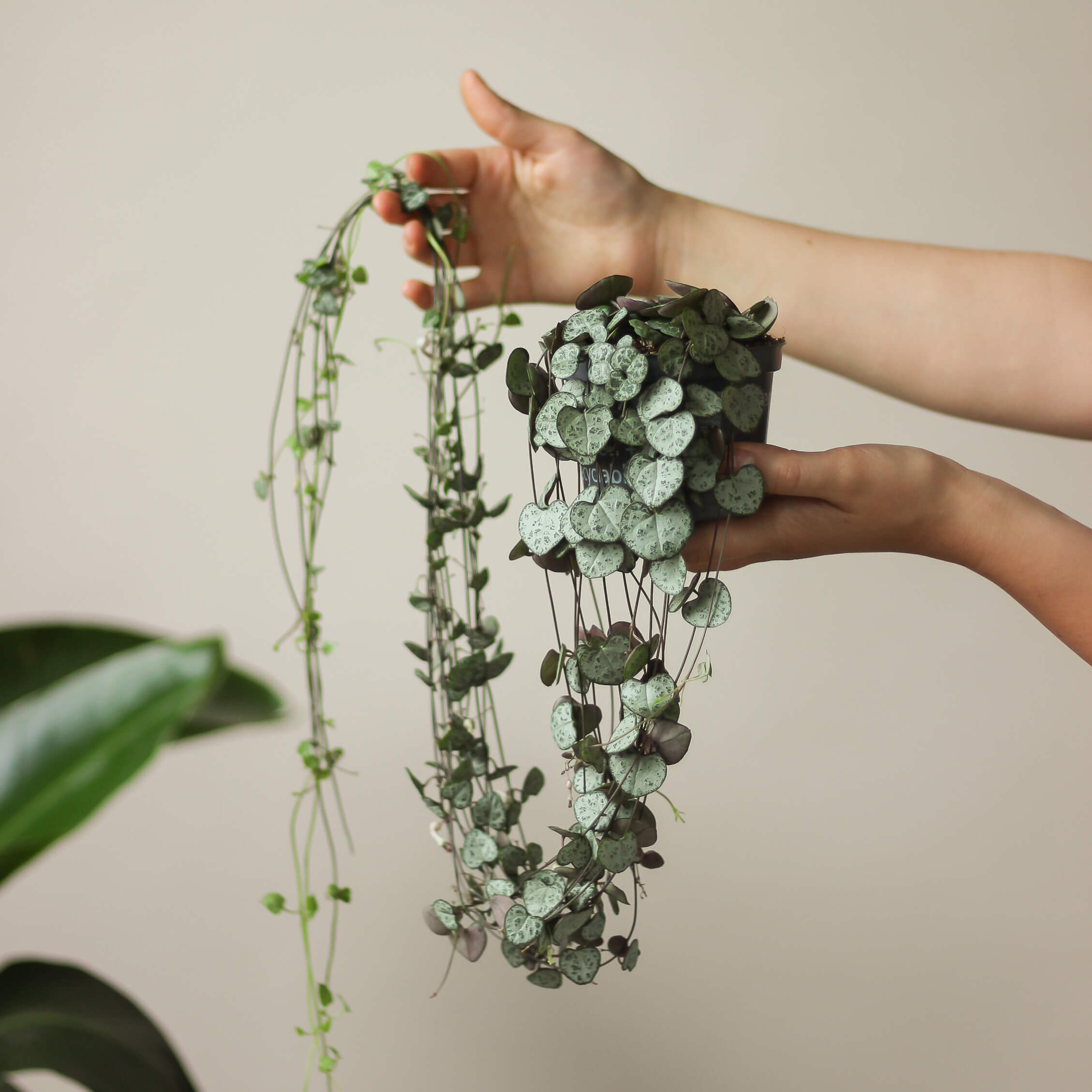
This romantic little plant, which has already gathered crowds of devoted plant lovers by draping its strings of hearts over shelves and plant stands, hails all the way from the mountainous regions of South Africa, though its cousins are also found in India, Saudi Arabia, Madagascar, and the Canary Islands. Ceropegia is a tuberous succulent with wonderful stems in the form of delicate threads adorned with tiny heart-shaped leaves and intriguing flowers. Fortunately, its delicate appearance does not reflect the plant's hardy nature. We can fall in love with it completely without worrying that we won't be able to handle caring for this affection.
candelabra, pipe, and wine glass
This is not a recipe for a successful evening, but just a few from the long list of nicknames for Ceropegia. Most of them were given because of the flowers, whose unusual shapes evoke various associations. The name Ceropegia itself comes from the Greek word keropegion meaning candelabra, which is an intricately decorated candlestick with several branches – which is why the vine is sometimes called a "candelabra plant" in our country. Other terms include bushman's pipe – the Bushman's pipe, lantern/parachute/umbrella flower – floral lantern/parachute/umbrella, wine-glass/rosary/necklace vine – wine-glass/rosary/necklace vine or the popular string of hearts, which is a string of hearts.
The lineage of the milkweed
The plant family of Ceropegia is just as extensive as its naming. The vine belongs to the Apocynaceae family – tropical species, many of which exhibit highly toxic properties, which is why they were once used to poison arrowheads. A subfamily of the aforementioned is Asclepiadoideae, commonly known as the milkweed family, or the milkweed family (hoyas also belong to it). This is due to the milky, white, or transparent sap of these plants. In Ceropegia, it is free of poisonous alkaloids, which is why it is completely safe for four-legged household members (you can read about other pet-friendly plants here). There are many species of Ceropegia, but our favorite, the string of hearts, was discovered in the rocky African mountains by botanist John Medley Wood, which is why its full botanical name is ceropegia woodii.
grow long and lush
now that we've covered the fun facts, let's get down to business. Ceropegia doesn't ask for much, and in the right conditions, its stems grow incredibly fast. With minimal care, you can look forward to a cascade or curtain of hearts adorning your shelf instead of just a single string. Here are the most important tips!
soil
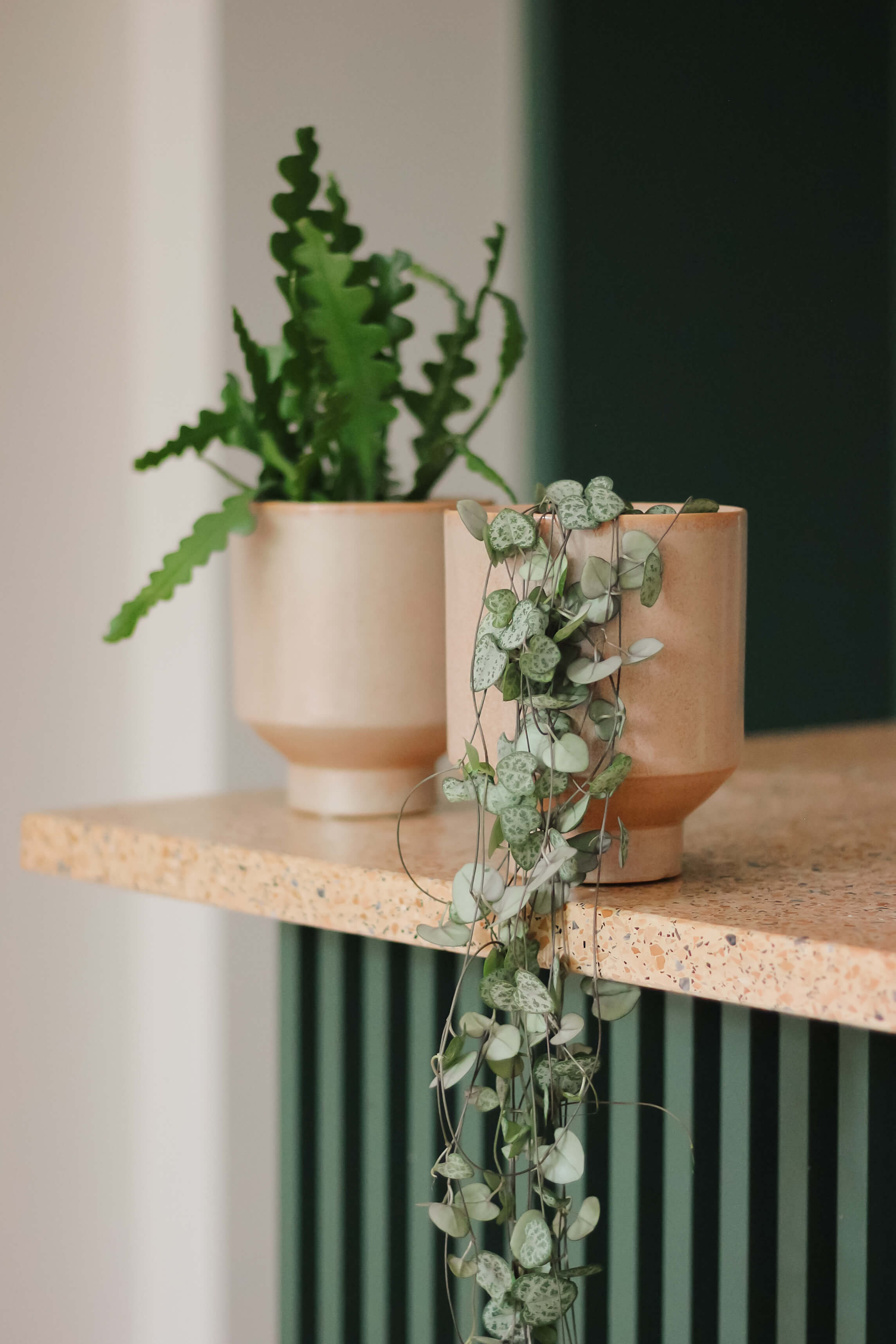
Ceropegia is a succulent that stores water in its fleshy leaves as well as in its deeply rooted underground tubers. To prevent waterlogging and rot, the soil for our garlands must be well-drained, porous, and fairly light. The best approach is to mix high-quality potting soil with a generous handful of perlite and sand, along with a bit of expanded clay or small pebbles. You can also buy pre-mixed cactus soil and combine it with standard potting soil in a 1:1 ratio. Always remember to use pots with drainage holes or add a thick layer of drainage material – Ceropegia cannot stand water sitting at its roots!
water
Although it is a succulent, it enjoys regular watering. However, keep it moderate and only water in small doses once the soil has dried out. During the growing season, Ceropegia will appreciate a drink about twice a week, while in winter, you should reduce watering to once a week. If the plant is too dry, it will let you know by wilting its leaves – that’s your cue to give it a drink. A good method is to pour water into the saucer and let the pot sit in it for about fifteen minutes, allowing the plant to absorb as much as it needs. Always use room-temperature, settled water, and in spring and summer, it’s worth adding a vitamin-rich humus fertilizer.
position
Ceropegia is quite tolerant when it comes to lighting, but it will thrive best in a bright spot that isn't exposed to direct, scorching afternoon sun. An east or west-facing window is ideal. This heart-shaped vine can also handle partial shade, but with insufficient light, the leaves will be smaller and lose their silvery pattern, and the spaces between them will stretch out, leaving bare stems. To enjoy a true cascade of hearts, remember that Ceropegia dislikes drafts and the very dry air found above a hot radiator.
what else is worth knowing?
If your Ceropegia rewards your good care with rapid growth and its stems start reaching your countertops and shelves or wandering in all directions, feel free to trim them to tame this heart-shaped wildness. On summer days, you might notice that Ceropegia forms small, brownish-gray tubers at the leaf nodes – these are for propagation, so if you cut the stems above the nodes and plant them in soil, you can make your plant bushier or share a cutting with a friend. If your Ceropegia gets plenty of gentle light, you can also look forward to its somewhat bizarre but beautiful flowers!
wonderful varieties
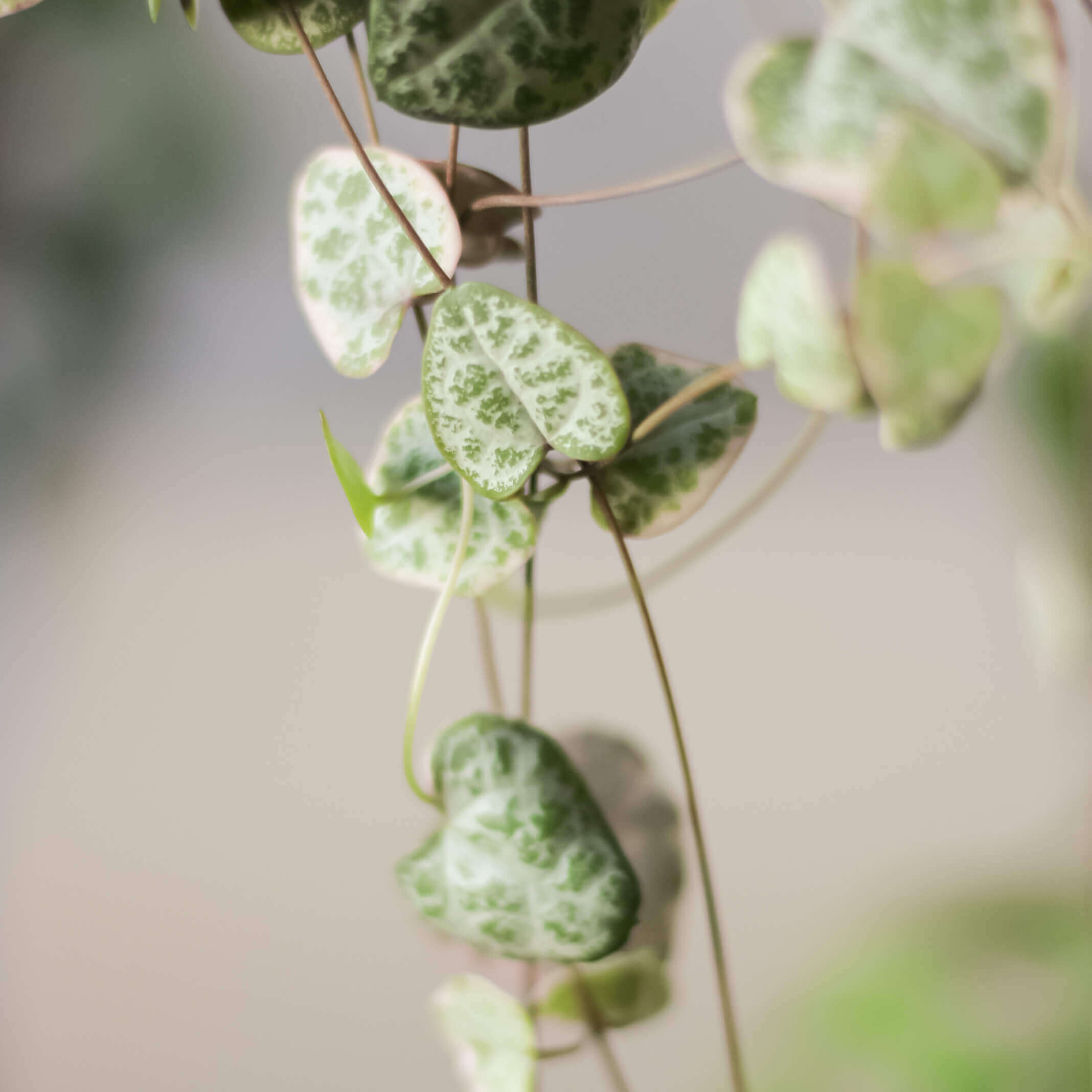
Alongside the classic Ceropegia woodii 'string of hearts' with its green leaves dusted in silver, your shelves can also be decorated by the cascade of hearts painted in cream, pink, and light green found in the sweet 'variegata' variety. It’s worth pairing them with the shimmering, silver-gray Ceropegia 'silver glory', which has bean-shaped leaves. That’s not all – there’s also the Ceropegia 'string of spades' with its lush green, arrow-shaped leaves, and 'orange river' with dark green leaves that look like little spearheads.
Are you already in love with these charming Ceropegias? Show us your romantic arrangements! And if you want to discover other easy-to-grow and tolerant species to start your plant journey with, take a look here.


