7 most common mistakes in DIY office greenery design
Discover the 7 most common mistakes in DIY plant arrangements to keep in mind so that greenery in the office remains a lasting feature of your space.
"I can do it better myself – they're just plants." This is how many DIY office greenery projects begin, but they don't always end in success. Small oversights in species selection, care, or placement can grow into problems that negatively impact office aesthetics, plant health, and even team comfort. Don't fall into these traps; learn about the 7 most common mistakes in DIY plant design so that your office greenery is not just a decoration, but a lasting feature of your space.
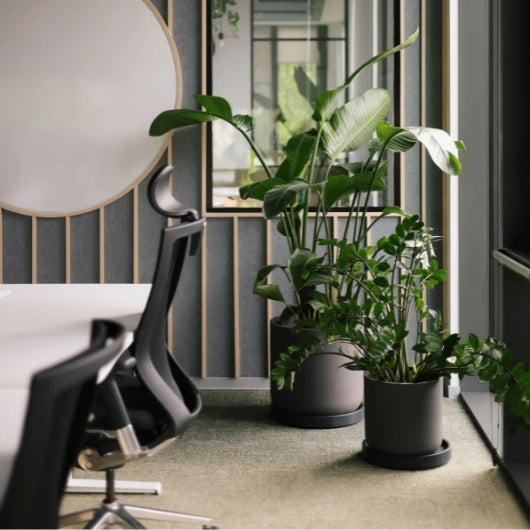
1. Incorrect pot selection - office greenery arrangement
DIY greenery arrangement in the office often involves looking at pots solely through the lens of aesthetics, forgetting about functional aspects. Popular stores are full of unusual forms that catch the eye—busts styled as antiques, animals, or abstract shapes. However, there is a significant risk that instead of supporting plant growth, these types of fancy pots will hinder it. Many such models lack drainage holes, which can lead to water pooling at the bottom of the pot and root rot. Conversely, unsuitable materials used in production, such as unsealed ceramics, can retain moisture excessively.
What should you do?
Opt for pots that meet the plants' needs—made of quality materials, with good drainage and the right size. Fancy shapes may be tempting, but it is still worth getting comfortable with a more minimalist design that won't be an obstacle if you decide to change your vision for the space and rearrange the office one day.
2. Poorly chosen location
Contrary to appearances, you and your office plants have a lot in common. They also don't like spending all day without access to natural light, and during the heating season, they can be sensitive to dry air and radiator heat. Plants, just like you, need the right conditions in the office to function well. A common mistake in DIY greenery arrangement is placing species that require a sunny spot in heavily shaded rooms or, worse, in windowless bathrooms. Proximity to radiators and air conditioners can, in turn, lead to drying out and dying.
What should you do?
Greenery arrangement requires selecting plants according to the conditions in the office. In darker rooms, undemanding shade-loving species, such as Zamioculcas or Sansevieria, will work better. Also, consider using grow lights with the appropriate spectrum and regularly monitor the condition of the plants. If you notice that the leaves are starting to yellow or their tips are dried out, it may be a sign that the location needs to be changed.
3. Office greenery arrangement and the lack of a long-term plant care plan
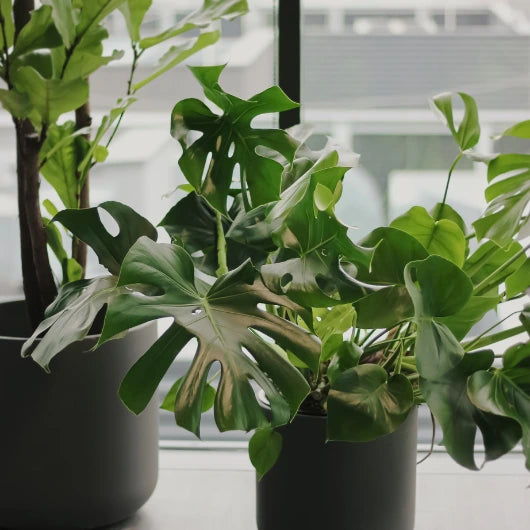
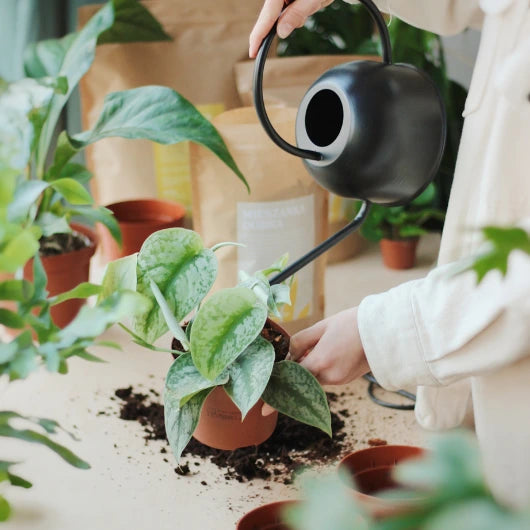
After the initial delight with green compositions comes the daily routine—watering, pruning, fertilizing, and monitoring health. The lack of a person assigned to these tasks can cause plants to start dying, getting sick, or, conversely, overgrowing, hindering the daily functioning of the office. The situation becomes especially complicated during the holiday season, when the office empties out and suddenly plant care lands low on the priority list. Without a long-term care plan, your carefully prepared greenery arrangement can quickly lose its charm.
What should you do?
Establish a plant care schedule, taking into account their specific needs, including the frequency of watering or fertilizing. If the team does not have the time or capacity to handle this, the best solution is to entrust the care to professionals. Our comprehensive plant care service in Wrocław and Warsaw starts from as little as 250 PLN per month - learn more about it here.
4. Choosing plants toxic to animals for a pet-friendly office
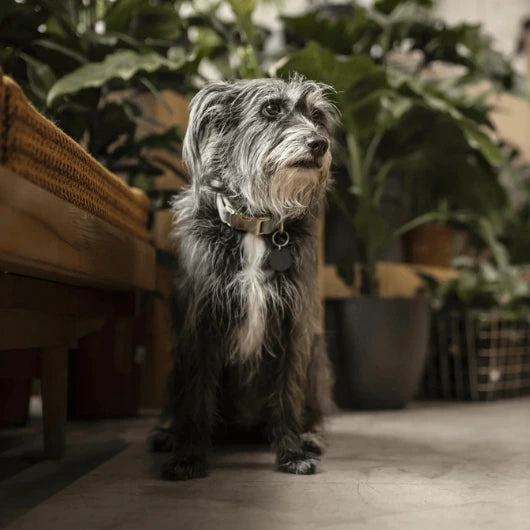
One of the mistakes made when DIYing a pet-friendly office green space is failing to check if the chosen species are on the list of plants toxic to animals. Unfortunately, this list includes many species commonly seen in offices and public spaces, such as monstera, aglaonema, peace lily, and dieffenbachia.
What should you do?
If dogs or cats visit your office, avoid toxic species, even if there are rooms that animals cannot access. Curious pets will always find a way to get where they shouldn't be. You can check a detailed list of pet-safe species here.
5. Placing plants in high-traffic areas
Plants in the office should support a healthy and productive work environment, not sabotage it. Our good intentions to green the space will backfire if we place too many plants in high-traffic areas, such as hallways or near doorways. As a result, the greenery will not only get in the way of office users, but it will also be prone to damage, such as broken stems or torn leaves. Furthermore, plants placed in transit zones may not thrive due to a lack of proper lighting and fluctuating temperatures.
What should you do?
If you really want greenery in high-traffic areas, consider using hanging planters or creating an eye-catching green wall in a specific spot. The latter doesn't have to mean costly interference with existing structures and installations – see an example of a green wall without an additional irrigation system that we created for Bank Millennium.
6. Office greenery design - following trends blindly
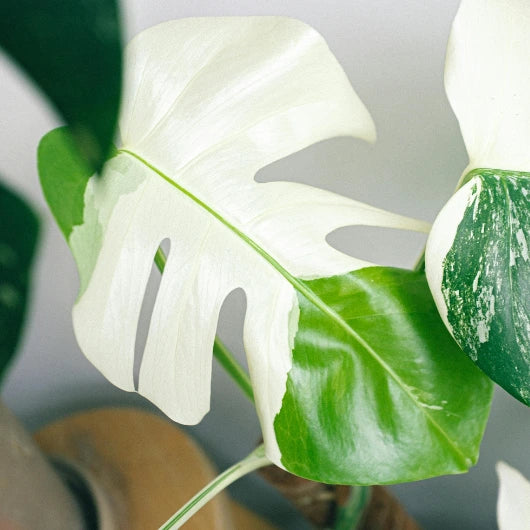
Rare collector species and variegated plants (with striking, light-colored patterns) are impressive, but don't be fooled by their attractive appearance or online popularity. These specimens require strictly controlled conditions, including plenty of natural light and constant attention. The desired variegation is the result of a genetic mutation that affects the production of chlorophyll, the green pigment responsible for photosynthesis. As a result, the variegated areas of the plant have a reduced capacity for photosynthesis, making them more sensitive to environmental conditions. In an office, where responsibility for plants is often shared among employees, such specimens can become a source of frustration and disappointment.
What should you do?
Instead of stubbornly following trends, opt for plants that are easy to care for but can still add character to your office space. Choose a few different species to diversify your arrangement – you can find suggestions for the best office plants in these articles: 5 best plant species for a shaded office; 5 species that are best at purifying the air; plants for beginners.
7. DIY office greenery and ill-considered plant selection
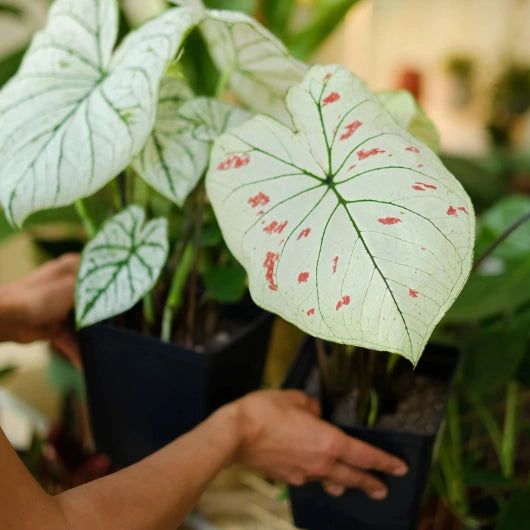
Colorful leaves and flowers are just as eye-catching as rare collector species or variegated plants. However, not everyone realizes that their attractive appearance may only be temporary. For example, caladium, while incredibly striking due to its colorful leaves, loses its charm after the growing season ends. Its bulbs must be stored properly so the plant can regrow the following season. Orchids also enter a dormant phase after blooming, requiring special care to delight you with their colorful petals again.
Instead of investing in plants that cannot maintain their beauty year-round, it is better to choose durable species that are pleasing to the eye regardless of the season. Among the most resilient varieties are the ZZ plant, dracaena, aglaonema and peace lilies. These plants not only thrive in offices with varying light levels, but they also don't require frequent watering.
Professional office greenery and plant design - design, installation, and maintenance of office plants
Before you turn your office into an Amazonian jungle, take a moment to consider whether your space is truly ready for greenery. As with any investment, interior plant design should be planned thoughtfully. If you are unsure how to design office greenery and how to select the right species and solutions, check out our comprehensive design, installation,andoffice plant maintenance service. With us, every plant will be in good hands, your office will gain natural charm, and you will gain the time and space to focus on what is truly important for the growth of your business.