Artificial office plants vs. live office plants. Is it worth investing in natural greenery for the office?
Artificial plants for the office or live plants for the office? Check which solution is better in terms of aesthetics, ecology, and long-term costs.
We’ll venture to say that many people have thought at some point: this place could use some greenery. Whether at home or in the office, plants can transform a space. In the latter case, however, things get a bit more complicated. Not every plant will thrive in specific office conditions, and not every team has the time to take proper care of them. So the question arises: live office plants or their convenient, artificial counterparts? Can an imitation of greenery effectively replace live plants? Or is it merely a decorative element—without any real impact on employee comfort or the implementation of sustainability goals in the office space? Let's see which solution works better in an office environment.
Live plants for the office - natural dynamics in the workplace
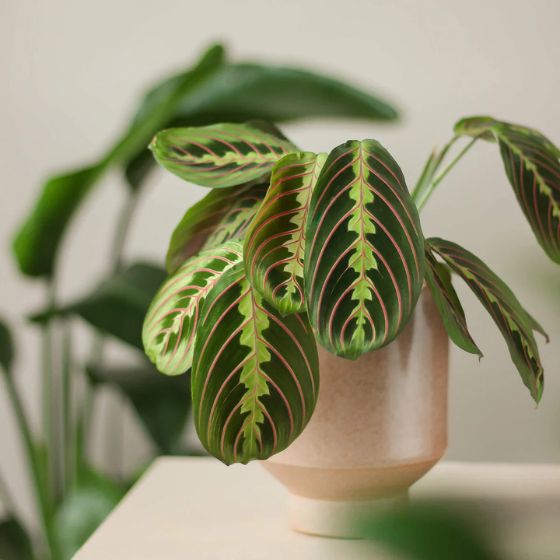
Live plants are not just alive in name. They bloom, sprout new shoots, and even change the position of their leaves throughout the day, such as the prayer plantwhich is famous for lowering its leaves during the day and raising them in the evening. Hence its common name - the praying plant. Another species, Monstera deliciosasurprises with its unusual shapes - leaves with a mosaic of holes that increase as the plant grows. In this way, living greenery brings a unique element of life and natural dynamics into the office.
This advantage is hard to find in artificial plants, which always look the same - if you don't count the dust gathering on them or leaves fading in the sun. This may conflict with the idea of bringing nature into the office, which by definition is variable and surprising.
Biophilic greenwashing - can artificial office plants be misleading?
When talking about the idea of bringing nature into interiors, it is hard not to mention biophilic design. This is a design movement that focuses on the premise that interiors should mimic the environment and allow us to connect with nature even in enclosed spaces. Our well-being benefits most from this. For this reason, the idea of biophilia is often linked to the concept of employee well-being, which is part of a broader strategy for building a sustainable office. Many modern companies are therefore striving to green their offices due to the positive impact of plants on employee productivity and mood.
Do spaces full of artificial plants deserve to be called biophilic offices and do they actually bring us closer to nature? Plant imitations, while visually attractive, are not the living, evolving elements whose value biophilia emphasizes. Therefore, companies investing in artificial office plants should be cautious about boasting about a "green office" as an expression of care for the space's users. Conscious clients and employees may perceive this as biophilic greenwashing - a very superficial reference to nature that does not bring real benefits to people or the environment.
Fire hazards and office plants
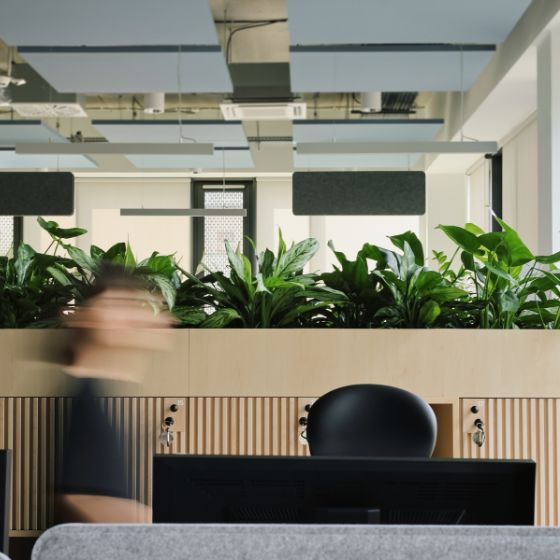
An old rule says that anything can happen. This also applies to office fires. Fire will not be indifferent to an office jungle; in fact, it can spread faster depending on the plants it encounters. Artificial specimens are usually made of plastics (PVC, polyester, latex), which can be flammable. Some manufacturers offer products with flame retardancy certificates (e.g., DIN 4102 B1 standards in Germany or NFPA 701 in the USA), but not every company may be aware of them.
And what is the situation with live plants? Due to their ability to store water, the leaves and stems of live plants are less prone to ignition compared to the dry synthetic materials from which their artificial counterparts are made.
Ecological aspects - do we need more plastic in the office?
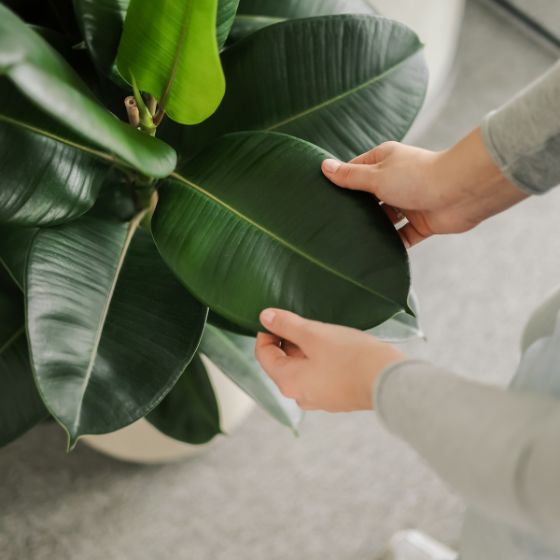
Imitations of live plants are usually made of plastic, which involves a high carbon footprint - both at the production stage and during eventual disposal. Although models made from recycled materials are appearing on the market, their environmental balance still remains unfavorable compared to live plants. Natural greenery is renewable - even if the leaves of office plants are damaged, they can be trimmed and the specimen restored to good condition with a little attention. Ultimately, live office plants can also be composted, ensuring they become part of a closed-loop system.
Low-quality artificial plants can easily deform, fade under light, and lose their appeal. Live plants, although they require more attention - regular watering, fertilizing, and protection against pests - have the advantage that with proper care, they can regenerate. Even if care is not perfect, there are many ways to save specimens - not just by pruning, but also by propagating healthy parts of the plant or giving cuttings to people who enjoy growing plants at home.
Long-term costs: artificial office plants vs. live office plants
Artificial office plants may seem like an attractive solution, primarily because they don't require watering, fertilizing, or repotting. However, their durability is often limited, even if the material they are made from has been treated with a UV-resistant coating. Depending on the amount of sunlight in the office, artificial plants are still prone to fading and warping due to heat. As a result, these artificial specimens may lose their initial aesthetic appeal after a few years and require replacement, generating additional costs and, above all, waste.
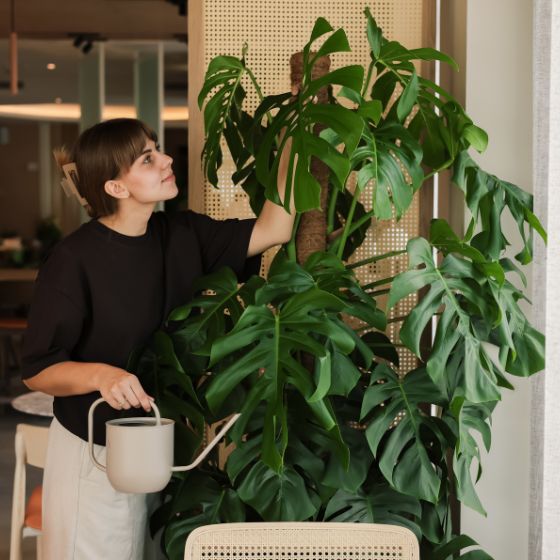
Live office plants can, in turn, thrive in an office for many years if you dedicate a little time to their proper care. With the right attention, natural greenery will look even more beautiful over time—plants will sprout new leaves, grow, climb, and delight the eye with their lush appearance. Regular maintenance is an investment in the extended life cycle of your plant arrangement, which in the long run may prove to be a more cost-effective and sustainable solution than replacing artificial greenery.
Which should you choose—artificial office plants or live office plants?
The decision to add greenery to an office should consider not only the visual aspect but also the environmental impact, the work atmosphere, and long-term maintenance costs. Artificial greenery is undeniably a convenient solution (at least initially), but it does not necessarily align with the principles of conscious and sustainable interior design. So, if you are facing the choice of which plants to invest in, ask yourself: is your priority aesthetics and convenience, or long-term, thoughtful solutions?
If you lean more toward live greenery but don't know where to start planning your office plant arrangement, consider seeking professional support. Selecting the right species, their placement, and their care can be a challenge, especially in spaces with specific conditions. Our team will help you create a functional and aesthetic plant arrangement tailored to your space and your employees' needs. Check out our offer for office green design in WrocławandWarsaw, as well as plant maintenance services. Well-planned and well-cared-for greenery means not only aesthetics but also a better work environment, greater comfort, and long-term benefits for your office!
Frequently Asked Questions - Artificial office plants vs. live office plants
Can artificial office plants replace live office plants?
Artificial plants can serve a decorative function, but they do not offer the benefits that come with live greenery, such as the element of natural dynamics in a space. In the context of biophilic design, artificial greenery can be seen as a superficial nod to nature that provides no real benefits.
Are artificial plants more eco-friendly than live office plants?
No, artificial plants are usually made of plastic, which involves a high carbon footprint during both production and disposal. In contrast, the life cycle of live plants can be extended through proper care. Even after they die, they can be composted, making them a more sustainable choice.
Are artificial office plants safer in terms of fire risk?
Not necessarily. Many artificial plants made of plastic are flammable, although some manufacturers offer models with fire-retardant certification. Live plants, on the other hand, are less prone to ignition due to their ability to store water, which can increase safety in the office.
Do live plants in the office generate higher costs than artificial ones?
At first glance, artificial plants may seem like a cheaper option because they don't require watering or maintenance. However, over time, their color may fade and the material may warp, leading to the need for replacement. Live plants, with proper care, can last for many years and continue to grow, which may prove more cost-effective in the long run.